

I write this fully aware that I may be wrong and that I often am, but predicting remains central to any serious intellectual work, in my opinion.
For some time, I have argued that structural and systemic pressures are steadily closing in on Khamenei, leaving him increasingly boxed in and prone to a series of strategic miscalculations that go beyond tactical error. These decisions are likely to stain his legacy and cost him far more than personal authority, threatening to unravel the entire proxy architecture on which his power, regional reach, and long-term survival have depended.
The Theological Roots of Khamenei’s Underestimation of Trump
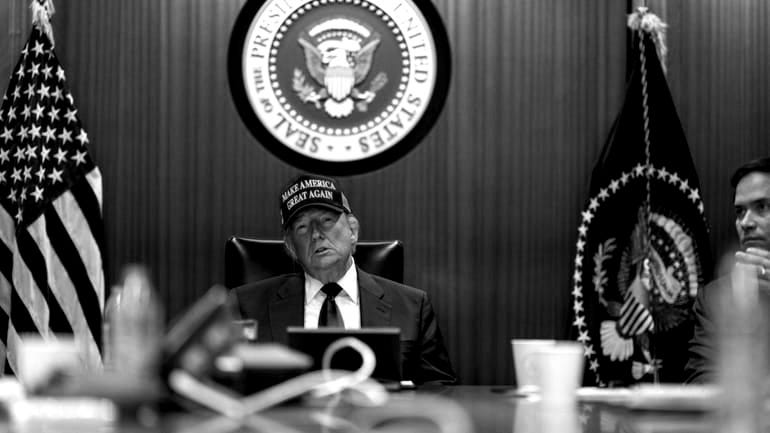
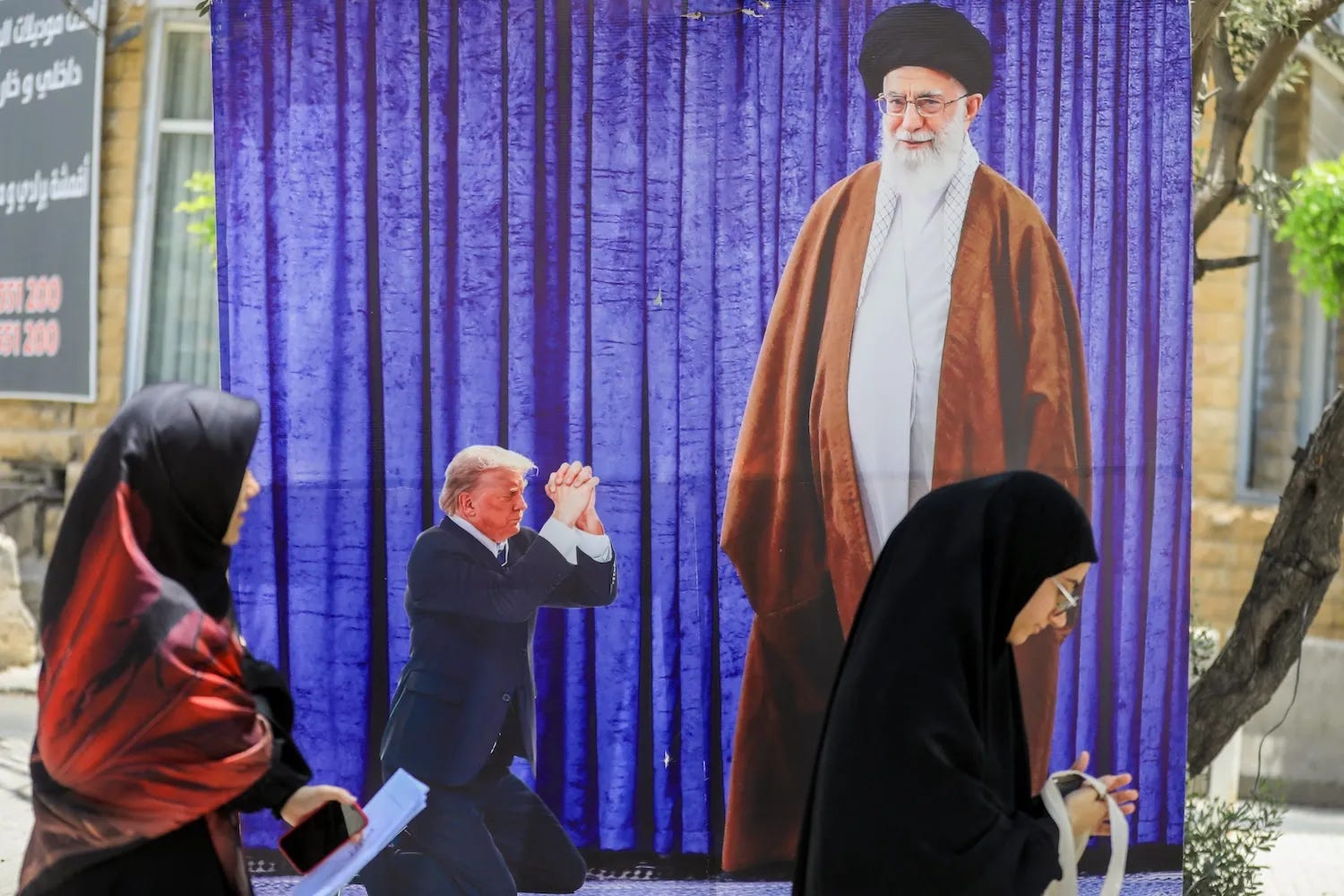
What I find even more striking, as I have argued elsewhere, is Khamenei’s persistent underestimation of Trump, expressed through public mockery and deliberate humiliation.
It’s a posture that is difficult to justify on strategic grounds when, first, Iran remains a non-nuclear state despite advancing uranium enrichment and therefore lacks the ultimate deterrent that would render such rhetorical contempt cost-free. And second, Trump has already demonstrated a willingness to translate rhetoric into direct action, most clearly with the January 2020 killing of Qassem Soleimani, which exposed the vulnerability of the regime’s senior leadership, and more recently through Operation Midnight Hammer, which further reinforced that American power under Trump is not merely declaratory but prepared to impose direct costs when deterrence is tested.
Khamenei’s misreading of Trump likely flows from the doctrine of the Guardianship of the Jurist, known in Farsi as Velayat-e Faqih, which holds that political authority derives not from public consent or economic performance but from a religious duty to rule in the absence of the Hidden Imam. Within this belief system, remaining in power is not merely a political outcome but a moral validation, making survival itself evidence that the system is correct.
Over time, this outlook has fused with Shiite martyrdom culture, which treats suffering as proof of righteousness rather than as a sign of failure. The effect is a systematic undervaluation of material power. Trump’s unpredictability is dismissed as impulsiveness, political polarization in the United States is read as paralysis rather than competition, and isolationist voices within his coalition are taken as signs of retreat rather than internal debate.
This logic is reinforced by theological concepts such as fitna, understood as disorder, and ibtilāʾ, understood as divine trial. Disruptive external actors are therefore seen less as strategic threats than as episodes of chaos meant to test endurance. Trump is interpreted not as a figure capable of imposing decisive costs but as a destabilizing force expected to exhaust itself, much like earlier pressures the regime believes it survived through patience rather than adjustment. This conviction leads Khamenei to treat confrontation as temporary turbulence, even as the balance of power continues to shift against him.
But these assumptions obscure a critical reality for Khamenei. Trump does not separate rhetoric from action, and while he favors deals, he does not approach them in the Obama-era sense of compromise, de-escalation, or equilibrium. Trump’s conception of a deal is competitive rather than conciliatory. It is about winning, imposing terms, and demonstrating dominance, not managing tensions or preserving process. That distinction appears largely absent from Khamenei’s reading. He seems to assume a continuation of the Obama model, in which pressure is applied to create space for accommodation. Trump uses pressure to extract submission. When defiance persists, he personalizes confrontation and imposes direct costs on leaders at the top, as illustrated by the case of Nicolás Maduro, whose experience should have signaled risk rather than reassurance to Khamenei
The Costs of Ignoring Israel’s Victory
More importantly, Khamenei and the circle around him, including figures from the Guardian Council and the IRGC, appear to have convinced themselves that Israel has become a liability in U.S. foreign policy.
The rise of anti-Israel voices on platforms like X is treated in Tehran as evidence that open alignment with Israel would fracture Trump’s political base and constrain his freedom of action. From this perspective, Trump is assumed to be captive to coalition management and domestic pressure. That assumption is, of coursee, misplaced. Trump does not take cues from online discourse or factional opinion. He listens primarily to himself, acts on instinct reinforced by personal judgment, and has repeatedly shown a willingness to override internal dissent when he believes credibility and personal authority are at stake.
More than that, this misreading appears to extend to Israel itself. Khamenei’s inner circle seems either unwilling or unable to fully grasp the scale of the damage Israel has already inflicted inside Iran during Operation Rising Lion, including deep intelligence penetration and operational reach well beyond what Tehran publicly acknowledges. The failure to internalize these losses reinforces the belief that pressure can be absorbed without consequence, even as the regime’s margin for error continues to narrow.
Khamenei’s position has become untenable at a moment when the Islamic Republic is unusually weak, exposed, and vulnerable. He fails to grasp how Israel functions as a deterrent and force multiplier for U.S. power by degrading Iranian capabilities in advance, exposing vulnerabilities Washington can later exploit, and reinforcing the credibility of American threats without requiring immediate U.S. action.
Ideology further blinds this assessment. Khamenei appears to interpret China’s and Russia’s anti-U.S. positions on selected issues as evidence of a cohesive counter-American alliance, assuming Iran is a member of an opposing bloc rather than a conditional partner. And as Iran’s leadership continues to misread American resolve, exaggerate the value of external backing, and discount its own exposure, Trump’s room for maneuver widens rather than narrows.
Trump’s range of responses are not going to be confined to a single path. It might include measures that weaken the regime’s capacity to control its population by targeting the coercive institutions on which it relies, notably the Islamic Revolutionary Guard Corps and the Basij, or actions that place accountability directly at the top. So do I think a Trump intervention is coming? Yes. The trajectory points in that direction.
To summarize, I believe that Khamenei is not facing a single crisis but the cumulative weight of repeated misjudgments. Leaders can survive pressure. They can survive isolation. They rarely survive a sustained pattern of error at this scale. If this course continues, Khamenei’s political ending is unlikely to be orderly, negotiated, or merciful. It will be bleak because he has made it so.
This article aged well.
"The effect is a systematic undervaluation of material power." The regime is very good at retail terrorism and very bad at actual battles.