
Japan Is the Big Winner
The Real Story

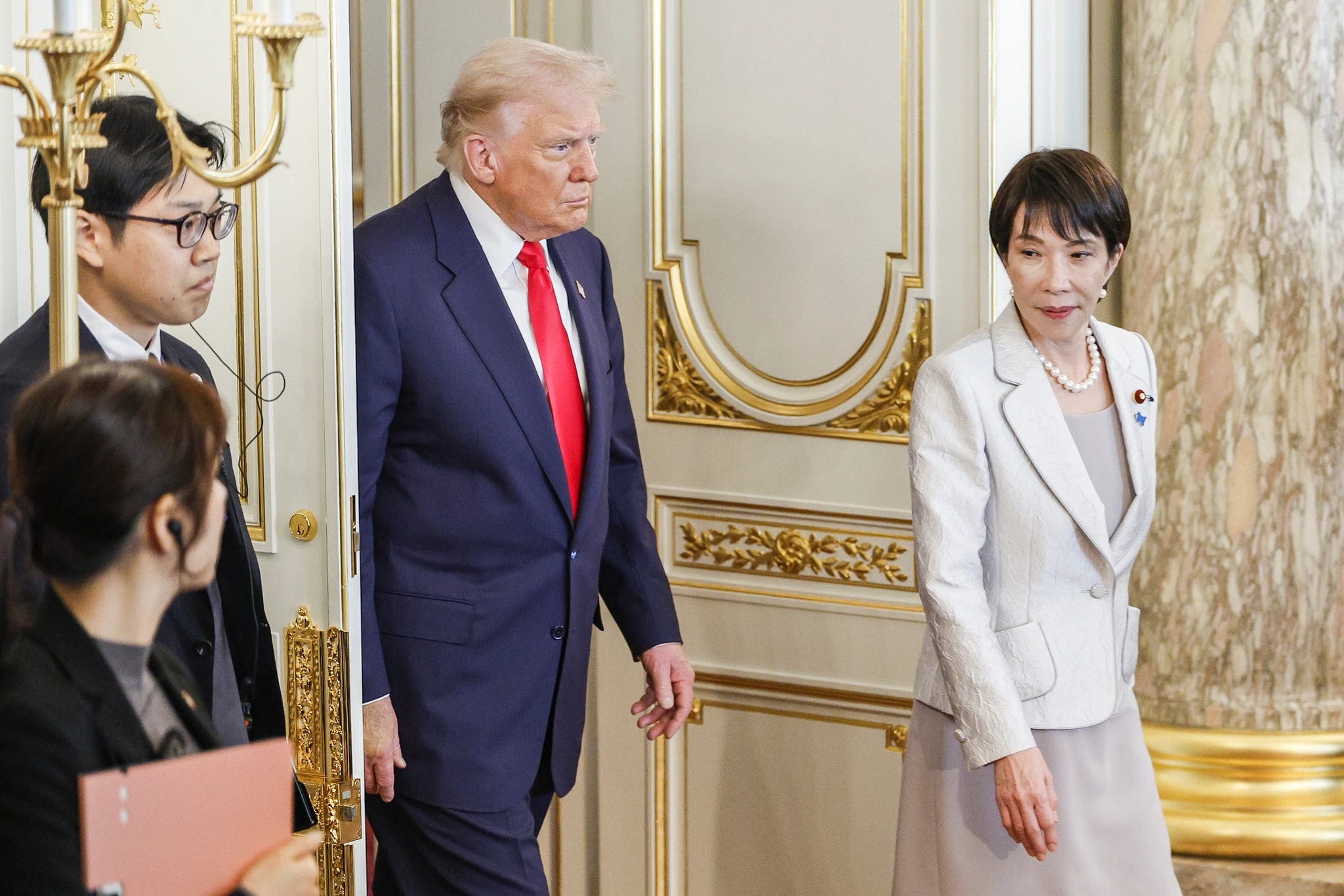
Nothing about Operation Epic Fury occurred within a thousand miles of Tokyo. Yet no capital in the world stands to gain more from the wreckage of Khamenei’s regime than the one sitting across the East China Sea from Shanghai.
Japan is one of China's main strategic rivals in the Western Pacific: the two compete for military dominance in the East and South China Seas, for economic influence across Southeast Asia, for secure energy supply chains, and for the allegiance of every mid-sized Pacific power now deciding whether its future runs through Washington or Beijing.
The gains Operation Epic Fury delivered to Tokyo are structural and extend across every dimension of that rivalry.
First, the energy constraint.
China’s ability to project power simultaneously in the South China Sea and the Western Pacific depends on a permissive energy environment, one in which tankers move freely, reserves remain full, and no external shock forces Beijing to choose between fueling its navy and fueling its economy. That environment no longer exists. Every barrel China must now renegotiate, reroute, or replace from Iranian sources tightens the logistical margin available for sustained military operations around Taiwan or the Senkaku Islands.
Second, the sanctions evasion infrastructure.
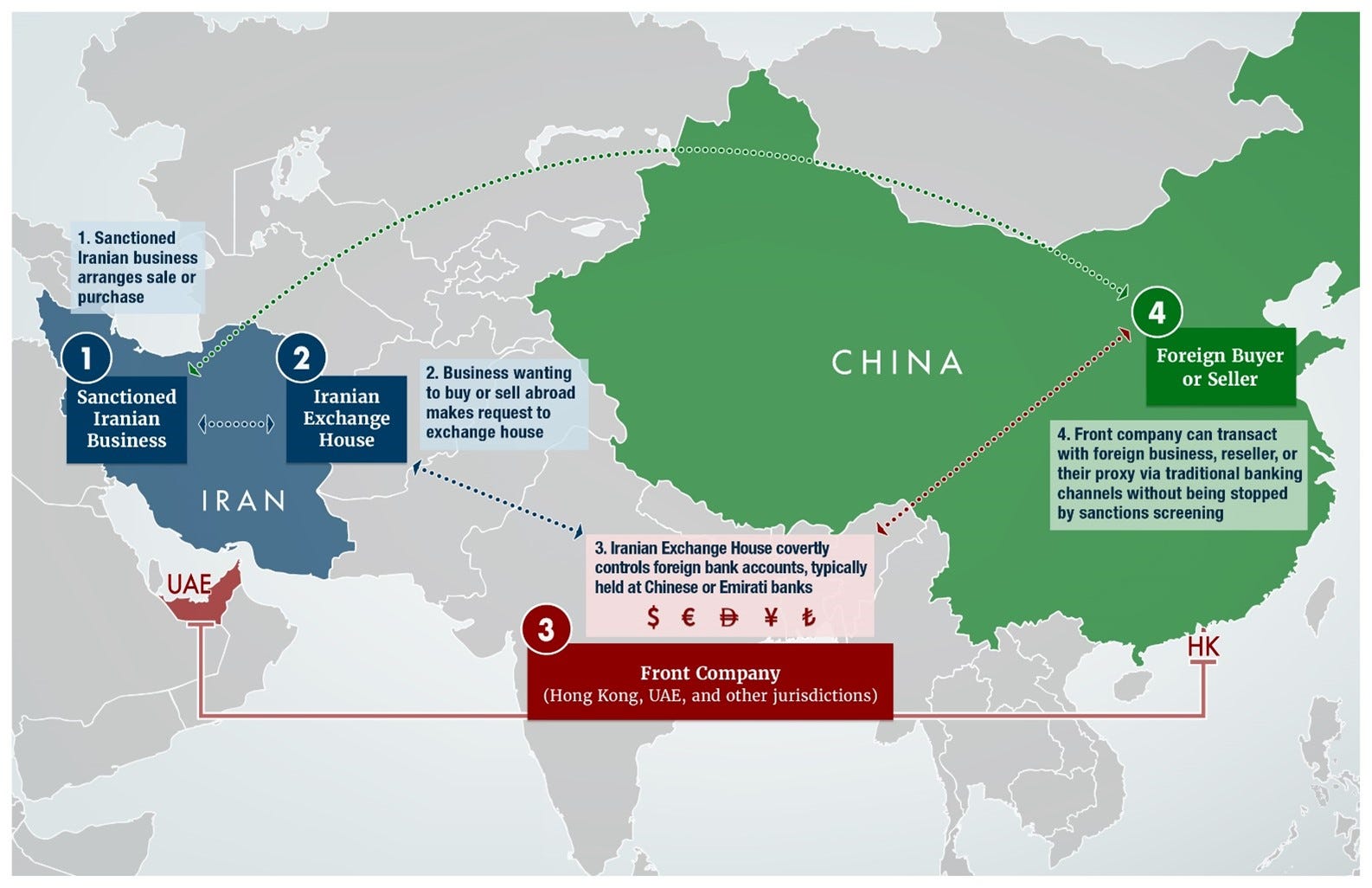
Iran is the world's most sophisticated laboratory for circumventing Western financial enforcement, and the networks it built had dual-use value for Beijing's own contingency planning in a Taiwan scenario where China itself could face comprehensive sanctions. The operational knowledge embedded in those networks is now degrading in real time. For Japanese defense planners, who have long worried that Western economic leverage over China might prove insufficient in a Taiwan crisis, the destruction of Beijing's most advanced sanctions-evasion rehearsal space is a strategic gain of the first order.
Third, the alliance contrast.
China, Russia, and Iran signed their trilateral agreement barely a month ago. Neither Moscow nor Beijing has moved to defend Tehran. The "axis" has been revealed as a series of transactional arrangements that collapse the moment American power is applied with seriousness.
Putin, who signed a 20-year comprehensive strategic partnership with Iran in January 2025, is now watching his second major security client buckle under Western military pressure in as many years, having already failed to translate Russian power into decisive outcomes in Ukraine. A president who cannot finish his own war has nothing left to extend to his partners.
For Tokyo, which has long treated Russian military activity around Hokkaido and the Kurils as a second-front threat designed to complement Chinese pressure in the south, the implications are clarifying. A Russia that cannot sustain its commitments to Iran has no credible capacity to open a northern front against Japan on Beijing's behalf.
It also shows that Japan's alliance with the United States rests on mutual defense obligations and seventy years of institutional integration. Every government in the Western Pacific can now see the difference.
Fourth, the Global South recalculation.
Beijing's diplomatic brand across the developing world rested on a core proposition: that alignment with China and Russia offered a viable counterweight to American coercion, a path to sovereignty. Operation Epic Fury has gutted that proposition in public view.
This is the second time since January that Washington has moved against a Chinese partner, after Maduro's fall in Venezuela, and in both cases Beijing absorbed the loss without visible distress. Every prospective partner state is now updating its priors.
The non-aligned path that Beijing marketed so effectively looks considerably less attractive when the patrons of non-alignment cannot protect their own clients. Japan, which has spent the better part of a decade building defense partnerships with the Philippines, Vietnam, and Indonesia, offering patrol vessels, radar systems, and coast guard training as alternatives to Chinese dependency, finds the credibility of that offering increased by an order of magnitude.
Fifth, the continental bypass.
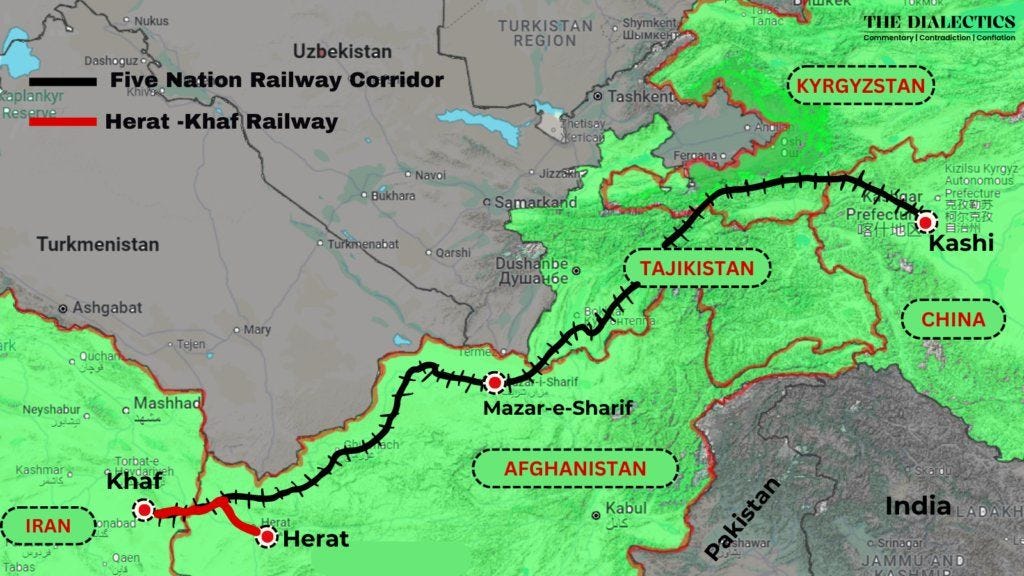
The Belt and Road corridor through Iran, the railway network that promised to free Beijing from dependence on the very maritime chokepoints Japan and the United States dominate, is now indefinitely deferred.
The Five Nations Railway connecting China to Iran through Central Asia depended on political stability that no longer exists. Every month that corridor remains inoperable is another month the Malacca Strait retains its strategic centrality, and another month Japan's geographic position astride the Western Pacific sea lanes appreciates in value.
Sixth, the Trump factor.
The administration that just executed Operation Epic Fury alongside Israel has simultaneously deepened military cooperation with Tokyo, expanded joint exercises in the Philippine Sea, and maintained the institutional commitment to Japanese security that no Chinese partner has ever received from Beijing.
Trump arrives in China next month having just destroyed a Chinese strategic partner, while the $13 billion Taiwan arms package remains conspicuously unsigned. For Japan, the configuration is close to ideal, they will see an American president who has proven that alliance commitments carry lethal weight, sitting across the table from a Chinese leader who has just discovered what it means to be on the other side of that equation.
What Tokyo received today was a confirmation: that the alliance architecture Japan has invested in since 1952 remains the only security framework in the Pacific that functions under pressure. China's alternative offered the promise of multipolarity but no protection. The distinction now carries weight and Japanese strategists are the primary beneficiaries of every government that recognizes it.
Slow down a little Zineb, you might find you have declared victory a bit soon. Iran is still fighting and seems to be inflicting significant damage on the US. The Iranians have already destroyed one of the most expensive radars in the world that cost more than one billion dollars. It was an American ballistic missile long range early warning radar that could track ballistic missile launches from western China right across to Southern Russia and all of Iran. There is also plenty of other damage on American bases across the region.
The absolutely huge question for Japan and the rest of the world is, will Iran block the straits of Hormuz? If they do that then Japan, along with many other countries such as South Korea, Australia and Singapore will be in an economic disaster. China is in a far better position than Japan because not only does it produce its own oil it can import oil from Iran by rail, avoiding the Straits entirely.
I suspect we will see Iran allowing tankers going to friendly countries like China to pass through the straits but blocking all other tankers. If that happens then given a month or so Japanese diplomats will be on their knees begging Iran to allow tankers out to go to Japan.
Japan benefits relative to China from Middle East shock but that’s a second-order effect, not a durable realignment.
Strategic advantage gained through disruption decays fast once actors adapt.
What matters isn’t who “wins” this phase, but who can convert volatility into lasting coordination.
Most can’t.