

This piece was originally published in the New York Post
In the past, the notion of “peace through strength” was read as a military proposition: Assemble enough force, and adversaries will stand down.
Operation Epic Fury has shown the error of that presumption.
We’ve seen in Iran how deterrence multiplies when military power, economic pressure and alliance consolidation strike together.
America’s response to the China challenge has suffered the same narrowness — until now.
Washington spent years treating competition with Beijing as a discrete series of problems — of the Indo-Pacific, or artificial intelligence, or trade balances — as though China were competing selectively, in specific theaters.
China, however, has been competing across every domain and every region simultaneously, building energy dependencies, embedding financial architecture and acquiring port access from the Atlantic to the South China Sea.
The Middle East was always a theater in that competition, and Iran was always a central CCP asset.
Beijing’s investment in Iran went well beyond oil.
Chinese companies supplied Tehran with sanctioned dual-use technology that kept Iran’s weapons programs advancing through years of international pressure.
In 2021, Beijing gave the regime access to BeiDou, its state-owned global positioning satellite system, directly enhancing Iran’s military targeting capacity.
In July 2025, Chinese Foreign Minister Wang Yi assured Iranian counterpart Abbas Araghchi that China would “continue to support Iran in safeguarding its national sovereignty and dignity” and in “resisting hegemonic and bullying policies.”
China was sustaining Iran’s defiance at every level — financial, technological, diplomatic — and normalizing it in the process.
Operation Epic Fury plowed directly through that arrangement.
Its defining doctrine has been military force and economic statecraft applied simultaneously, leaving no window for adaptation or rerouting.
Washington degraded Iran’s military capacity and squeezed the financial architecture sustaining it at the same time.
The operation exposed a structural reality Beijing can’t escape: The United States has a deep alliance system in the Middle East, while China’s links are tenuous at best.
It also laid bare China’s vulnerability, as it relies on resources it does not control.
In the Persian Gulf itself, Beijing had sought to build real diplomatic capital.
By brokering the Iran-Saudi normalization deal in 2023 and the Hamas-Fatah reconciliation agreement, it presented itself as the indispensable outside power.
Gulf states then watched America run a sustained military campaign against Beijing’s partner — and according to reports this week, at least one of them, the United Arab Emirates, participated in military strikes on Iran as well.
The campaign is shattering the myth of a Middle East arrayed against Washington, vindicating every government that joined the Abraham Accords and named Iran as its primary threat.
In the Strait of Hormuz, Tehran’s closure move aimed to change President Trump’s calculus and turn Gulf states against Washington.
It achieved the opposite, proving to Gulf capitals precisely why Tehran cannot be permitted a nuclear arsenal.
They watched, too, as China absorbed economic damage it had no instrument to stop.
Japan drew the operational conclusion from the regime’s closure action, committing over $6 billion to US liquefied natural gas supply chains.
But the economic track is where China is taking the worst damage.
The US Treasury hit Hengli Petrochemical, teapot refineries and 40 shadow fleet operators with sanctions.
The State Department then designated several Chinese entities for supplying Iran with satellite intelligence on US and allied military movements, placing Beijing’s complicity on the public record.
Xi Jinping responded by invoking China’s anti-extraterritoriality law, directing Chinese firms to ignore US sanctions — but in practice, Beijing has little leverage over companies whose survival depends on access to the dollar system.
Israel was central to all of it: The targeting precision and sustained strike capacity that degraded Iran’s military infrastructure required an ally of its caliber, and China has no equivalent partner in the region.
And as the military action proceeded, the United States made gains across the map aimed at limiting China’s reach.
The Pentagon locked in a Major Defense Cooperation Partnership with Indonesia — the archipelago that sits astride Malacca, Sunda and Lombok, three straits through which most of China’s energy imports flow.
In the Philippines, a new 4,000-acre US-governed economic security zone on the Luzon Strait is anchoring an American presence at the doorstep of the South China Sea.
In the western Balkans, the US signed deals at Dubrovnik’s Three Seas Initiative Summit — a $1.5 billion Croatia-Bosnia gas interconnection, a $6 billion Albanian LNG framework and a $58 billion AI data center investment — foreclosing Chinese capital from the Adriatic in a single package.
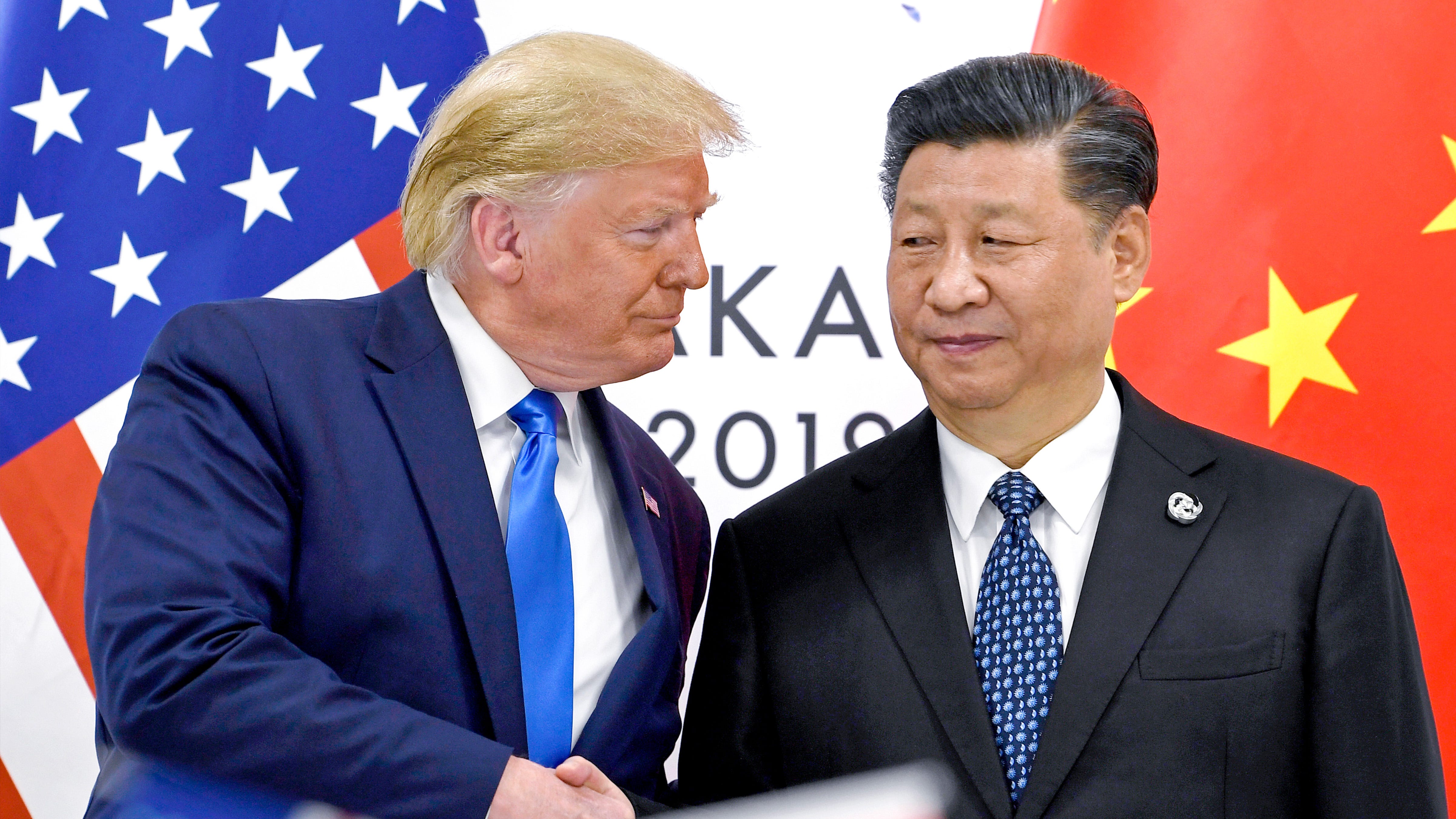
Trump heads to Beijing this week carrying immense leverage over China.
To earn any sanctions relief for designated Chinese firms, Xi may well have to dismantle the Iranian military procurement network Beijing spent a decade building.
The summit is the test of whether the president can hold what his administration has built.
I wish the MSM was 10% as informed and thoughtful as Zineb. Thank you for providing much needed perspective to this thorny issue.
Dream on.
I support the destruction of the terror state of Iran.
However, there is a reason that no other President has taken them on, and it’s not that they were all chickenshit.
Every day this goes on the Iranians gain leverage, the US loses good will (soft power), the Chinese sell more solar panels, while we burn through irreplaceable wealth and munitions.