

Always say what you see. Above all — and far harder — always see what you see.
Charles Péguy
Since last October, when I published my piece on Zohran Mamdani, Third-Worldism, and the Algerian Revolution, I have received a wide range of reactions. Some have been thoughtful, others less so, and a number of interpretations have been attributed to my argument that bear little resemblance to what I actually wrote. I want to clarify a few points.
I wrote about Third-Worldism because my work focuses on foreign policy, and I am interested in the way foreign conflicts are mobilized for domestic purposes, as well as how domestic tensions shape the interpretation of those conflicts.
In the United States and elsewhere, one repeatedly encounters a fixation on external powers, accompanied by a vocabulary that relies on terms such as “surrogate power” or “settler colonialism.”
My premise is that this type of language doesn’t emerge spontaneously since it’s rooted in a specific intellectual tradition, what was originally called tiers-mondisme.
The term itself is often treated today as a polemical label, but has a precise origin. Alfred Sauvy coined the expression “Third World” in 1952 to describe a category of countries situated outside the dominant Cold War blocs, and from that point an entire body of political thought developed around it.
Islamism as a Third-Worldist Force
I also chose to address this question because the term “Islamism” is used loosely. In the United States and in most Western countries, Islamic movements rarely emerge1 as autonomous political actors. Their expression is mainly indirect, shaped by broader ideological currents that define how they are received and articulated.
First, Islamism in its doctrinal core demands a fully ordered society ruled by religious law — sharia. In Western Europe, especially France, secularism and laïcité set formal limits, but Islamists treat those limits as tools for adaptation and infiltration rather than genuine barriers.
They cleverly mask their ambitions in the language of human rights, minority protections, and anti-discrimination, allowing them to maneuver inside secular systems. They readily align with segments of the radical left around shared enemies, enabling tactical coordination without ever abandoning their ultimate goals. Most dangerously, they provide a ready-made playbook of “resistance” that fuels mobilization and justifies violence.
Second, modern political Islamism maintains a clear direction. It wages a total critique of modernity, liberalism, and the West, all branded as symptoms of Western civilizational decay. This contempt extends to the Westernized individual and to the West itself as a symbol of corruption.
The same judgment falls on Muslim societies that have succumbed to Western influence: they are branded complicit, degenerate, and therefore legitimate targets for destruction. This vision meshes perfectly with the daily practice of radical groups, who devote themselves to hunting down and punishing anyone labeled a collaborator with the United States. Their fury at the Gulf states, routinely denounced as capitalist pigs, gains extra venom from the Islamist verdict that brands them as corrupt, inauthentic, and traitors to true Islam.
Third, this Islamist direction converges perfectly with Third-Worldist thinking. The West is cast as the ultimate adversary and the supreme reference point for all evil, while every local grievance is absorbed into a grand vision of global resistance. Islamism slots neatly into a larger anti-imperialist framework obsessed with delivering absolute historical justice.
This is precisely why Green activists find so much common ground with Hezbollah and openly display affinity for these groups. The shared enemy and the shared narrative make the alliance feel natural.
Most people, unless they spend time engaging with foreign policy analysis, tend to view these ideas as abstract. I think they only become visible when they translate into political action, when movements portray themselves as part of a global decolonial project, when slogans such as “decolonizing a city” enter mainstream discourse, or when policy directions, including the push toward blocs like BRICS, begin to reflect this sort of grievance and resentment.
The mobilization for Gaza among certain segments of European youth also crashed into the June 2024 European elections.
In France, it deepened the fractures within a left already torn between Jean-Luc Mélenchon’s La France Insoumise (LFI) — fiercely anti-Israel and staunchly pro-Gaza — and the Socialist Party, home to many Jewish intellectuals who are radically hostile to Benjamin Netanyahu yet deeply attached to the Hebrew state.
This war between two lefts — the “decolonial” against the “colonial,” in the words of LFI’s lead candidate, MEP Manon Aubry — was further inflamed by the promotion of Franco-Palestinian jurist Rima Hassan, who is now set to take her seat in Strasbourg. Instead of focusing on social issues, the election became fixated on identity politics, with the Palestinian cause serving as the central theme for the Insoumis. This strategy allowed them to secure votes from both working-class Muslim immigrant communities and a segment of middle-class university students.
Le Bouleversement du monde: L'après-7 Octobre
Gilles Kepel
Third-Worldism in the U.S. Context
While trying to explain the attitude of intellectuals — merciless toward the failings of democracies, indulgent toward the greatest crimes, provided they are committed in the name of the right doctrines — I first encountered the sacred words: the Left, Revolution, Proletariat.
Raymond Aron, L'Opium des intellectuels, 1955
What’s striking today is that foreign conflicts now crash across borders in real time, carried by an unrelenting flood of images, commentary, and instant interpretation. They are devoured, processed, and forcibly reframed through a single ideological lens that imposes artificial order on events that would otherwise look chaotic and remote.
In this process, Third-Worldism supplies the crucial direction. It resurrects the old Marxist scaffolding of center versus periphery, recasting every distant war as part of an eternal global struggle between the exploiting core and the oppressed margins.
In the United States, several dynamics explain the reemergence of this:
The first is the institutionalization of Third-Worldist ideology within universities. The study of decolonization remains essential to understanding global history. Civilizations rise and fall, populations move, cultures intermingle, and every society carries traces of conquest and exchange. Within much of the contemporary academy, this inquiry has taken on a moral function. This is damaging to a genuine understanding of power dynamics and history.
The second is the exhaustion of domestic progressive politics. Political campaigns centered on identity have reached a point of fatigue in the United States. They continue to shape discourse, while their capacity to mobilize has weakened. This is where Third-Worldism introduces a different register. Political energy moves from the individual to the global, and a structural reading of power regains prominence.
The third is the expansion of anti-Israelism within a wider ideological field. Israel appears as the place where American power becomes nakedly visible, a concentrated symbol of global hierarchies and domination. It becomes a fixation. This reading rests on the conviction that every political conflict is merely a surface expression of deeper economic and political structures. The question of Israel thus becomes inseparable from the question of American empire itself, and the entire conflict is swallowed into a single, sweeping narrative of global struggle against oppression.
A fourth dynamic can be found in the weakening of national political reference points. Public debate shows a growing tendency to interpret domestic issues through external categories and conflicts. The language of international struggle is migrating inward, reshaping how political life in the United States is even understood. The old distinction between domestic and foreign affairs is collapsing. Only global narratives now supply the master frame through which every local issue is interpreted and judged. One can perhaps look at what podcasters are talking about today to gain a sense of it.
A World Read Through Global Struggle
It is far easier to condemn the world than to justify it.
Raymond Aron
I do not claim that Third-Worldism explains all the problems of the United States or of any other country. That would be an overreach. My aim is more limited. I am trying to understand the drivers behind certain patterns of thought, the belief systems that give them structure, and the energy that sustains them.
The United States, as a major power, inevitably becomes the object of competing interpretations, and some of these systems organize themselves primarily in opposition to it. Each country, in turn, develops its own variant of Third-Worldist thinking, shaped by its history and political traditions. Saudi Arabia, Turkey, Egypt, France, Italy, Argentina... All have their Third-Worldists.
But what is even more striking is that, within this broader pattern, the rise of antisemitism in the West serves as a clear indicator of how far this mode of thinking has spread. As global conflicts are increasingly read through categories of domination and oppression, complex political realities are compressed into blunt hierarchies of power.
Within that ordering, Jews and Israel are placed on the side identified with dominance, stripped of historical specificity and recast as symbols. In its current forms, this depiction goes further, presenting Jews as the embodiment of a cosmopolitan American project, rootless, powerful, aligned with capital and empire, a convenient stand-in for everything associated with Western hegemony. And worse, they have Israel.
This translation gives hostility a political language and allows it to circulate within a thought process that appears legitimate, even established.
Most people will miss what is happening entirely. It is far too easy to dismiss this intellectual current as marginal noise and remain comfortably absorbed in small causes, campaigns, and personal projects. That comfortable habit belongs to a dead era. In the United States, the conditions have fundamentally changed. Public life will now unfold under an unrelenting stream of global exposure and interpretation.
In this new environment, Third-Worldism will not dominate as an official doctrine. Instead, it will function as a ruthless organizing machine for political mobilization.
It will weld disparate tensions together, force them into a single broader horizon, and discipline them through the familiar categories of class, domination, exploitation, and imperial hierarchy. Every local actor will be stripped of individuality and recast as a mere expression of larger historical forces, locked inside a sweeping narrative of capital and dependency.
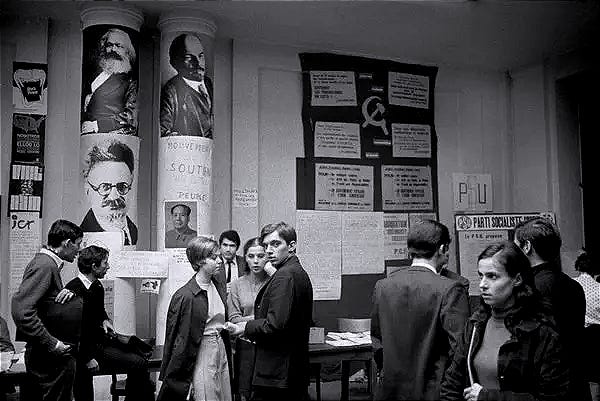
Third-Worldism drew its raw power in the 1960s and 1970s from the Cold War’s rigid bipolar frame, which fused scattered conflicts into one grand narrative and transformed isolated events into a single intelligible global struggle.
It’s reemerging now in the United States under radically new conditions. The instant circulation of information, of hot takes, the visibility of distant wars, and the desperate hunger for a unifying political language are once again stitching separate events into one continuous, unforgiving fight against the West and its friends.
I have put the word emerge in bold because I think that Islamic movements as we see them today in places like Belgium will end up purging those who joined them and become autonomous. Obviously.
You say what you see, and you say it well.
“…….I have put the word emerge in bold because I think that Islamic movements as we see them today in places like Belgium will end up purging those who joined them and become autonomous. Obviously…….”
Absolutely agree.
Islam and the Left initially cooperate because they share separate but operationally compatible Globalist visions, expressed in doctrinal terms.
Unfortunately, when access to the levers of power have been obtained through such a cooperation Sharia will supervene and the ideological niceties of the Left will be eliminated, along with the membership.
In the UK the Labour Party is feeling the harsh reality of this process as having served their purpose the Moslem block vote is being moved to the next bunch of ‘useful idiots’, the Green Party.
This also ties in with the Author’s perception that Global rather that domestic issues will in future drive political discourse. The fact Moslem MP’s were elected to the British Parliament at the last general election on a Gaza ticket seems to confirm that view.