
Thinking Twice
Maybe You Shouldn't

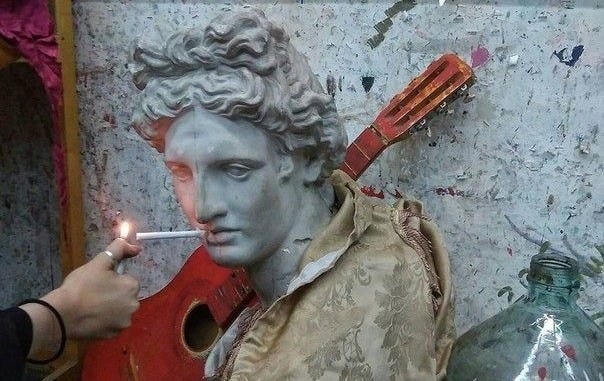
“The more ingenious our apparatus, the coarser and more unskillful are our senses.”
― Jean-Jacques Rousseau, Emile, or On Education
How many times have you found yourself asking what to think, and never how to think? How many times have you been reminded, before opening your mouth, that you must think twice? From the very beginning, you are told that instinct is suspect, that hesitation is wisdom. A child who speaks too quickly is humiliated, a youth who acts too swiftly is corrected, an adult who trusts his first impulse is ridiculed, and interrogated.
And so thought becomes a court in which the first voice is always guilty. The sentence is passed before the evidence is heard. The body is silenced, its signals mistranslated into errors, its impulses reduced to accusations against itself. You do not think; you interrogate yourself. You do not speak; you censor. You live under suspicion, condemned to explain, to justify, to apologize for the mere fact that a thought appeared in you at all.
“Thinking twice” becomes the permanent condition. The cost is estrangement. Our first impulses — where thought actually begins — are smothered before they can be tested. We no longer recognize them as thought at all. The mind, trained in this way, does not grow sharper but duller, endlessly rehearsing conclusions while losing touch with the raw material of thinking itself.
There is an old tale of a child abandoned on an island, told by the Andalusian philosopher Ibn Ṭufayl. The boy’s name is Hayy ibn Yaqẓān—“Alive, son of Awake.” Without parents, teachers, or tradition, he grows up alone, surrounded by earth, beasts, and stars. His education is not given but drawn from the world/nature itself.
Hunger was his first instructor. It showed him what sustained and what destroyed. Pain marked the edges of his body. The screams of animals awakened pity, and their deaths made him face his own. He clothed himself with skins, guarded himself against fire, cut open the bodies of beasts to read their hidden order, and in time turned the knife upon himself. Each lesson arrived as an ache, a tremor, a fear. Thought followed sensation. Hunger drove him to choose between food and poison. Pain revealed the line between safety and ruin. Every thought was weighed against the balance of survival and death. To ignore this “truth” was to perish; to follow it was to live. Knowledge was bound to this balance. From this struggle, thought arose, not as speculation but as necessity, hardened through observation and experiment.
While it is true that this remains a fable, there is a lesson in it that endures. Ibn Tufayl was not suggesting that a child abandoned on an island could replace civilization, nor that instinct alone could be enough for wisdom. His tale is an allegory, a meditation on the possibilities of the human mind when it is not shackled by convention.
The point is not that tradition is useless, but that it comes at a cost. Knowledge arrives to us already processed, and we forget that thought begins in immediacy. The first spark is sensation, the first teacher is the body. Hayy ibn Yaqẓān serves as a reminder that thinking is not merely the repetition of what has been authorized, but rather the act of listening to the first signal and testing it against the world.
To give authority to the first thought is not recklessness but courage. It admits that the self speaks before reason, and that reason exists to interpret rather than to strangle. Thinking twice may prevent mistakes, but thinking once is what keeps thought alive.
This matters because we live in an era where thought has been separated from the body. The flood of information turns thinking into selection, into click and compare and repeat, while the original experience of thought, born of sensation, is pushed into exile. Knowledge no longer means what you see or feel or suffer, but what can be indexed and reproduced.
Baudrillard warned of this drift, where the real is replaced by its signs and experience is displaced by endless simulation. We scroll through representations of life until the representations feel more solid than life itself. The first stirrings, whether repulsion, desire, or intuition, are treated as untrustworthy because they cannot be stored or transmitted as data. What remains is a reality stripped of texture, a mirror that reflects nothing of the body.
The lesson of Hayy ibn Yaqẓān is therefore not quaint. It shows that thinking begins in the senses. To forget this is to surrender the ground of our being.
Critical thought is not the destruction of instinct but its refinement. Without sensation as raw material, reason turns sterile.
Great piece, all the more relevant given how technology has pervaded our lives over the past 15 years, and for longer than that as well. Homo neuroticus is the new state of mankind.
Thank you for this Zineb, this is fascinating. As my wife often says to me, “you’ve gone all philosophical on us”.
It reminds me of the probably apocryphal story of King James IV of Scotland locking two new born babies on Inchkeith island with a deaf-mute wet nurse, to see whether they would grow up speaking Hebrew in the absence of any other linguistic input (such was the hold of Christianity over popular thinking at that time). The outcome is not known.
On a side note, had fellow-Andalusian Juan Goytisolo recounted the tale from his lair in Tangier, he would have had the children speaking fluent Arabic, but that’s another story…