


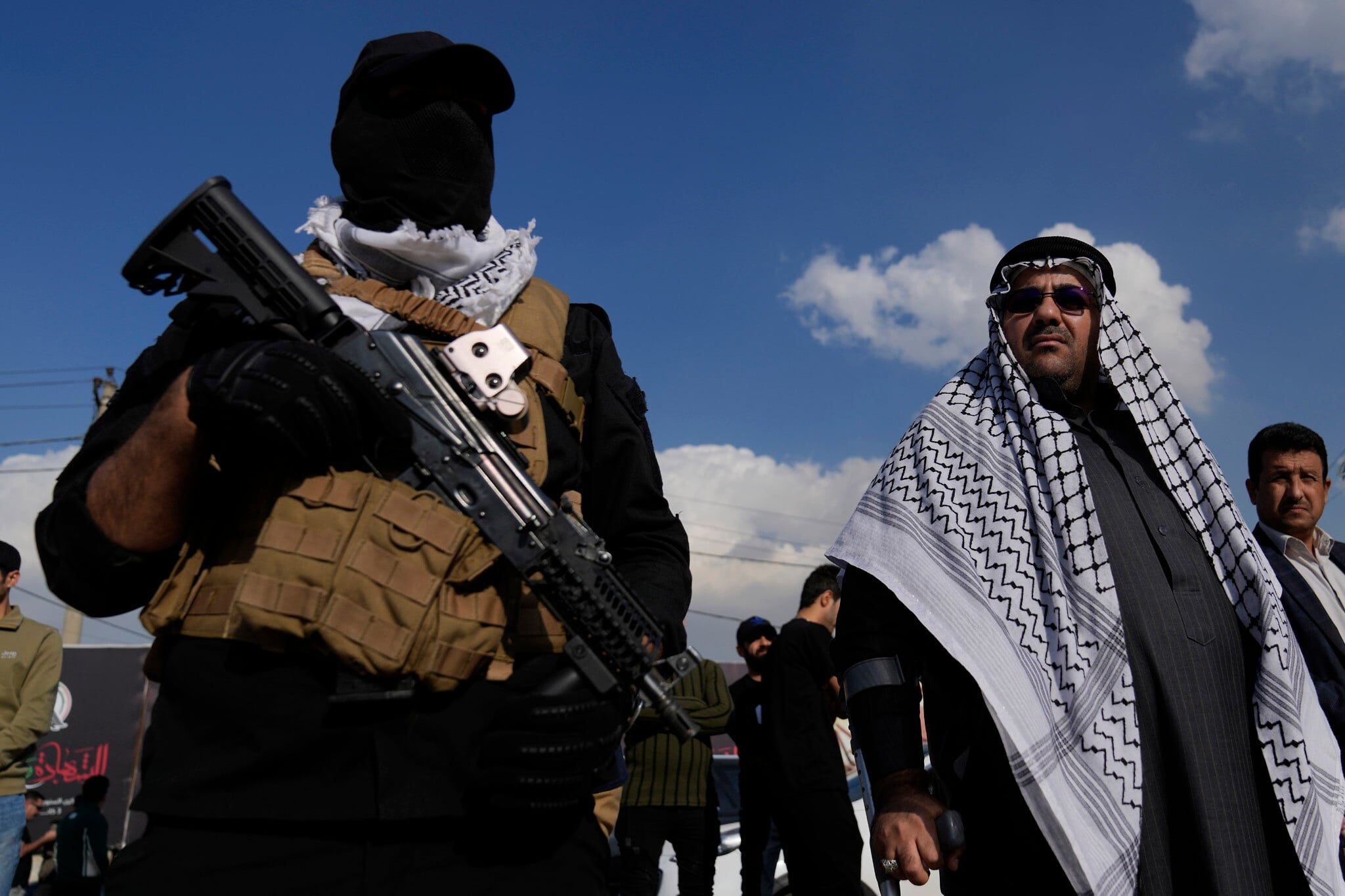
Western coverage of Operation Epic Fury has unfolded almost entirely on Iran’s own terms.
The dominant frame across European and American commentary treats the Islamic Republic as the aggrieved party narrating its resistance, and the discussion in mainstream outlets and across social media platforms has largely been organized around what Iran claims, what Iran endures, and what Iran dares to threaten.
This frame leaves an enormous gap in the picture, and the gap is the Arab world — a civilization that has spent forty years watching the Islamic Republic erode its institutional, theological, and cultural foundations.
To grasp what is actually happening in the Middle East, a Western observer needs to hold three dimensions simultaneously, and the architecture of Western political debate makes this structurally difficult, if not in certain cases impossible.
Three Things the West Cannot See
The first is the Arab relationship with Iran. From the vantage point of Brussels or London, Iran presents itself as a resistance movement with a grievance against American hegemony and Israeli occupation, and this presentation maps comfortably onto familiar Western anticolonial frameworks.
What it does not map onto is the lived experience of Arab populations in Lebanon, Iraq, Yemen, Bahrain, Syria, and across the Gulf. In those countries, Iran's presence meant Hezbollah holding the Lebanese state hostage to Tehran's decisions, thirty-five armed factions in Iraq drawing salaries from Iranian funds channeled through the Iraqi national treasury, and Houthi commanders answering to the Islamic Revolutionary Guard Corps while firing on Arab civilians from Yemeni soil. Freedom is not the word any serious Arab observer would use for what Iran brought.
Indeed, the Arab world's quarrel with Iran runs far deeper than American bases or Israeli airstrikes. What drives it is the systematic subversion of Arab sovereignty by a foreign power that uses the language of Islamic solidarity as cover for an imperial project conducted through proxies.
The second dimension is the proxy question itself, where Western analysis fails most comprehensively. Iran goes far beyond supporting armed groups. Parallel state structures get built inside Arab countries, financial systems get captured, and political figures get installed who owe their existence and survival entirely to Tehran.
The Iranians who have administered this project understand it as the export of a revolution, but what Arab populations have experienced is closer to a colonial occupation conducted through intermediaries, and as of now, they’re not mourning the Islamic Republic.
When Westerners treat these proxy networks as instruments of legitimate resistance rather than as mechanisms of subjugation, they endorse an imperial project while believing themselves to be opposing one, and as a matter of fact, make themselves the legitimizing force behind Iran’s war against the Arab world.
The third dimension is the most counterintuitive for a Western audience, and it is the one most consequential for how the current war is understood and misunderstood. For Arab nationalists, including secular nationalists and even those with deep reservations about Israeli policy, Iran represents a greater and more immediate threat than Israel does.
This is a position that Western media are structurally ill-equipped to render intelligible, because Western discourse on the Middle East has been organized for decades around the Israeli-Palestinian conflict as the primary axis of regional injustice.
The result is that when Western governments and Western publics take strong positions against Israel’s actions against Iran’s operations, they believe themselves to be standing with the Arab world. In reality, they are advancing a position that the Arab world does not share and has not asked for, while ignoring the threat that Arab governments and Arab populations actually live with.
The rhetorical use of Israel as a perpetual alibi for Iranian aggression has been one of the Islamic Republic’s most durable tools, and Western opinion has served as the unwitting amplifier of that tool across the entire duration of the Islamic Republic’s existence.
The War the Arab World Is Watching
What makes this moment significant is that Operation Epic Fury has accelerated a reckoning that was already underway. The Arab world is watching the proxy architecture Iran spent decades constructing get dismantled, and it is processing the implications for its own political future.
The first thing that has emerged from this is a demonstration of capability that no one predicted. Gulf states that absorbed thousands of rockets and drones while maintaining full civilian life and political composure have revealed a military steadiness that decades of condescension from Western and Arab nationalist commentators had written off as impossible.
The second is a region at a genuine inflection point, one where the destruction of Iran’s proxy architecture opens a real possibility of Arab states governing themselves without external interference for the first time in a generation.
Western observers who followed this war through the lens of Iranian social media accounts have been watching a carefully produced performance. The Arab world has been watching something else entirely, the first serious challenge to an ideology that was never democratically adopted, never welcomed, and imposed through violence and subversion from the moment of its founding.
The United States and Israel, long cast in Arab political culture as the twin engines of regional oppression, are being processed by a significant and growing portion of Arab opinion as something closer to liberators, not in the language of gratitude, which Arab dignity would resist, but in the language of relief.
Two interviews have proven especially illuminating in this regard. One features an Egyptian writer, the other a former Iraqi parliamentarian, both speaking on a Saudi-sponsored Arab channel with the kind of frankness that the Western media landscape rarely produces and rarely amplifies. Each, in his own way, says the same thing: Iran is the enemy.
I hope that reading them gives serious observers of international affairs a flavor of what the real debate looks like inside the Arab world, conducted in Arabic, on Arab terms, and almost entirely out of Western view.
Ibrahim Issa, Egyptian Writer, speaking from Cairo with host Nayef
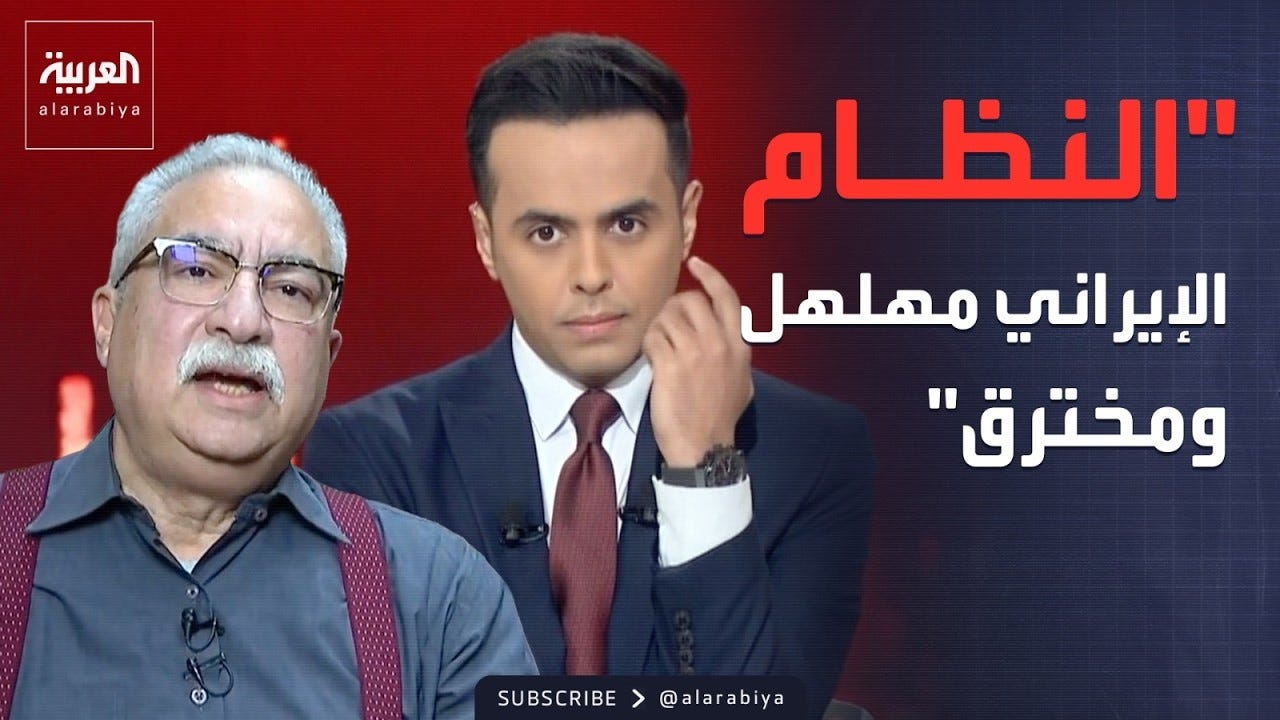
Host: When someone from Iran or from the pro-Iranians listens to you, they will say: in 38 days, the United States and Israel could not destroy the regime, could not change it, could not enter Iran by land, could not force Iran to surrender, and Trump went to a truce because he had no other option. What is your response?
Issa: Look, if these are the arguments that convince them, good — they satisfy themselves. You cannot convince a madman that he is mad. No matter how skilled a psychiatrist you are, there is no mentally disturbed person on earth who admits his disturbance. Let alone someone who is both mentally disturbed and ideologically driven at the same time.
But all of this raises the question about the war’s own objectives. This same argument was repeated to the point of tedium about Gaza — as Hamas’s presence was being crushed in Gaza, they said “Hamas hasn’t been defeated, Hamas exists, Hamas is negotiating, Hamas forced the enemy to the negotiating table” — the same nonsense repeated again.
The regime hasn’t fallen — and who said a regime can fall from the air alone? Saddam Hussein, in 1991, after the liberation of Kuwait and the massive defeat of Iraq and its army, remained in power from 1991 to 2003, twelve years. Does that mean he wasn’t defeated in 1991? The regime may have survived, but it is hollow, rotted, penetrated, decrepit, and now it will face its own people face to face after this truce — in a week, two weeks, a month, two months, a year, two years — with enormous challenges.
Let us assume the opposite, Professor Nayef: if the Iranian regime had managed to assassinate Netanyahu, the defense minister, the head of intelligence, the head of Mossad — what would they say then? That we were defeated? When the scene reaches this level of political decay and political delirium, we should not chase the arguments of madmen. We are not going to sit and talk about self-evident truths with them, to convince the pro-Iranians or the Mullah regime that it has been defeated. I am not going to convince him because he is like a man afflicted with color blindness — he sees green as red, and no matter how hard you try to convince him that what he sees as green is actually red, he will not believe you.
Host: Why did you describe everyone who supports Iran in its aggressive attacks against Gulf states, or even those who stay silent about it — as if they saw nothing — as legitimizing treason and collaboration? Convince the viewer that this description is deserved.
Issa: 1000%. Let me say first: the purpose of dialogue, debate, and presenting evidence is to enlighten people, to enlighten public opinion, to enlighten the Arab masses — not to convince the pro-Iranians, the Iranian regime, or the Mullah system that it has been defeated. That is outside my concerns, not on my list of priorities.
But when I say that everyone who has openly and clearly sympathized with, supported, or stayed silent about the savage, blatant, and despicable Iranian aggression against Arab countries in the Gulf, they are supporting and endorsing treason and collaboration. Why?
Because when Hezbollah exists in Lebanon, when you support Iran and its infiltration of Arab societies and Arab states — whether we take the example of Hezbollah, the Popular Mobilization Forces, or the Houthis — what does it mean when you, an ordinary Arab citizen subjected to massive media and cultural coercion from political Islam and Arab nationalist movements, support Hezbollah? It means you are supporting a party that describes itself as the party of Velayat-e Faqih in the heart of an Arab state.
You are supporting a party whose loyalty to Iran is declared. You are supporting an armed organization inside a state — meaning you are supporting secession from the army, supporting rebellion against the army, supporting the proliferation of military forces inside any country.
Apply this to Lebanon, to Jordan, to Iraq, to Egypt, to Tunisia. When you tell me that an organization, merely because it raises the banner of fighting Israel and being “with the resistance,” and you accept it as an agent paid and funded by a foreign power, a traitor whose loyalty is to another state, a military rebel against his country and its sovereignty — fragmenting and splitting the state, as we saw in Yemen and as we see today with Hezbollah in Lebanon — hijacking the decision of the state, hijacking the decision of the people — is this not treason and collaboration? What else would you call it?
Treason and collaboration with a foreign organization with foreign loyalty inside this homeland, receiving money and support, acting on orders from outside, and receiving funds from abroad. If this is not collaboration, what is? If this is not treason to the homeland, what is?
When we say the organization “Bayt al-Maqdis” in Sinai — when it was from ISIS and al-Qaeda — if you fund an organization that raises its banners and rebels against its army, its country, its sovereignty, receiving external support — what is its name? I think Egyptian patriots, nationalists, and Nasserists would not tell us that those organizations are patriotic. They must be treasonous organizations. Every terrorist organization is necessarily treasonous and collaborationist. But if ISIS raises the banner of fighting Israel, should we be like ISIS?
Host: Professor Ibrahim, you mentioned important points we will return to. But you came a moment ago to the positions of some of these politicians, thinkers, and Arab elites — nationalists, leftists — who agreed with the Islamists, whether from Shia or Sunni militias or otherwise. They are all in the same trench. But can one say today that these elites and thought leaders in the Arab world — the leftists and nationalists — are the reason some Arabs, even citizens of the countries targeted by Iranian aggression, would celebrate and cheer their own targeting by Iran with rockets, drones, and spy cells? Do you hold them responsible?
Issa: I hold the Arab political culture responsible since the 1950s and ‘60s until now — the hegemony of the political Islam project and the Nasserist and leftist ideas that dominate Arab culture, control its keys, and reign over it. That is the real problem.
We are in an inheritance — the dung inheritance, the mental and intellectual dung that dominates and controls the Arab mind.
Many have escaped it; I cannot say at all that Arab society and Arab peoples have not stood with the Gulf states, or that they stand with Israel, or stand with Iran. I do not think that. The problem belongs to those affiliated with the Islamist and nationalist currents and those influenced by their ideas. And this is natural, because they see it in school curricula, in mosque sermons, in religious instruction, in the media, and in social media. These are large, not trivial forces — dominant over the Arab mind since the 1950s.
Then came the post-Islamic Awakening phase and Islamist dominance over the Arab scene. So you are facing a Nasserist-nationalist thought onto which Islamist thought was grafted, creating a terrifying rigidity and paralysis of Arab mentality, to the point of glorifying and magnifying Gamal Abdel Nasser the defeated, while attacking and accusing Anwar Sadat the victor.
I speak militarily, not about peace or anything else. The one who won the battle and the war — Anwar Sadat — is the object of hatred and attack from both Islamists, who also killed him, and Nasserists and nationalists who to this day say we did not win in ‘73.
So it is perfectly natural that someone who believes Egypt and the Arabs did not win in ‘73 would now consider himself victorious. He sees through a completely different lens: the one who crossed and liberated the land is the one who was defeated, and the one who was struck to the bone, whose military power was crushed, who has nothing left but remnants of rockets stockpiled for decades at the expense of the Iranian people’s wealth, capacities, and freedom — these nationalists, Nasserists, human rights advocates, and Islamists who speak about Arab regimes and attack them and consider them producers of human rights violations are conspiring and falsifying in a way that no sound mind can follow — about what Iran commits daily in human rights violations against its own people since the first moment of the accursed revolution, the Islamic Revolution in Iran, which was an Iranian revolution and turned into an Islamic revolution through blood, killing, and executions.
This left that now supports Iran — Iran, by the way, kills your leftists inside Iran. The Mullah regime suppresses the left and suppresses all freedom. The left can have demonstrators beaten and killed by the thousands, while you, in your own country, want the right to demonstrate and accuse your state of suppressing demonstrators, yet you approve of the crushing of Iranian demonstrators.
These people have schizophrenic personalities. Their behavior can only be explained psychologically, not politically — it belongs to psychology, not political science.
Former Iraqi Member of Parliament Faiq al-Sheikh Ali, with host Rasha
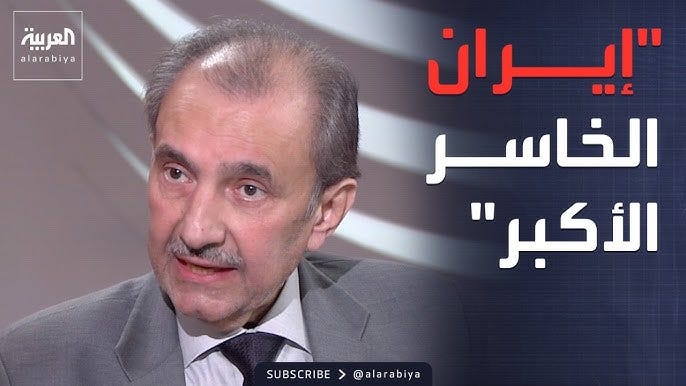
Host: Has the regime fallen or not, Professor Faiq?
Faiq: Rasha, before I answer whether the regime has fallen or not — you know, the peoples of the Gulf, like the Iraqi people and Gulf peoples, contain a proportion of Iranians — old Iranians, 200, 150, 120 years settled there, holding citizenship of these countries. These Iranians are now among the greatest haters of Iran and the turbans. You have lost a high proportion of your original citizens who used to live in the Gulf states and even Iraq — you have lost their loyalty and love. They now hate you, hate Iran, hate the regime and its conduct, because you attacked them. They did not know at what moment a rocket might fall on them. Because the rocket launched — the girl who fell in Kuwait — the rocket coming from Iran does not distinguish between an Iranian and a non-Iranian. I mean, all people now hate the regime.
Host: I will return to the question of people, but has the regime in Iran fallen, politically and practically?
Faiq: The regime is finished. Any regime in the world, especially a dictatorial one, consists of a head and those surrounding the head. Fine — where is the head? Ali Khamenei is gone. Those surrounding the head — would that the first, second, and third fundamental lines had all been eliminated. Everything at the level of the Revolutionary Guard and at the level of senior politicians we knew for 40 or more years — all gone, all killed.
Host: They say the Revolutionary Guard still exists, and as long as it withstood this war, Iran is still strong.
Faiq: True, the Revolutionary Guard still exists, but I am talking about the leadership, the senior figures. The current commanders of the Revolutionary Guard are low-level — fourth tier, not third, not second, not first. These have had standing orders from long ago: if something happens to Iran, you act on your own, you make your own decisions — no longer a supreme head controlling you or a specific commander telling you what to do. You act as you see fit.
Our enemies are the Gulf, our enemies are America and Israel. These people are fighting now, so you, Revolutionary Guard soldier holding the rank of first lieutenant, captain, or major, act as you please, make your own judgment; the important thing is enmity toward all these countries.
Host: Is the survival of these people in the interest of the region and its stability, or against it?
Faiq: Against. First, against the Iranian people, because this regime is built on repression. All Iranian revolutions were suppressed by the Revolutionary Guard. I hear that at the beginning, the number of martyrs of the latest revolution — just a day or two before the war — Iran announced 3,000, or the globally circulating figure is 32,000, and now Trump is talking about 45,000.
Those who speak of these numbers do not know Iran or the Iranian people. I can say with a clear conscience: more than 100,000. Because in 2009, during the Green Revolution, when 60% of the Iranian people rose up, the Revolutionary Guard alone killed a quarter of a million people. Not to mention the prisons, the arrests, and so on. These are criminals who use a policy of extermination — immediately and without discussion: you are an Israeli agent, a Zionist, an American agent, an infidel — they kill their own people, they slaughter them. They slaughtered a quarter of a million.
Host: So, after this war that lasted more than a month, what version of the Iranian regime did the Americans leave us in the region?
Faiq: The war has not ended, Rasha.
(…)
Faiq: This is a given. And now I address the Arab citizen: what do you have to say in sympathy with Iran? You know what my wish is? I should not say this — it is not politically appropriate. But my wish may be that two people govern you: my wish in this life and even in the next — one of them is named Saddam Hussein. Even if you sympathize with Iran, I wish he would slaughter you. I wish he would slaughter you right now because you sympathize with Iran — slaughter your family, your relatives, your neighbors, because you sympathize with Iran. Even if you tell him a million times, he would slaughter them all. That is one. My wish is that this would rule you until you come to understand what Iran is.
The second thing I wish — that Iran governs you as it governs me now, and you see the humiliation, hunger, degradation, abuse, contempt — and an Iranian comes to visit Karbala while the great Iraqi, who stood fighting Iran for eight years and brought it to its knees, kneels and washes the Iranian’s feet — and his feet are covered in mud and filth — and drinks the water used to wash those feet, on the pretext that this person is coming from Iran to walk to Imam Hussein, peace be upon him. I wish this kind of state ruled you, so you understand — how can you, an Arab, accept this? This is what Iran is doing to an Arab country. How can you be ruled like this? How can you sympathize with them?
Do you understand what kind of superstition and ignorance they spread among us in Iraq? I am coming to tell you — I am afraid you might say “what is this?” — or accuse me of being an extremist, maybe al-Qaeda, maybe ISIS.
I don’t know. You need to know I am a son of Najaf and of the religious establishment; my grandfather was a senior religious authority, and I am a son of the Hawza seminary. So, understand who I am and what I am telling you. How are you thinking? I am not like you — I differ from you in thinking. You are now taken over by sympathy, under the pretext that these are Muslims coming to fight Jews. What about the Jews? Let’s get to that point — that is the killer point.
I am Iraqi — the proportion of Jews in Iraq at the beginning of the twentieth century in Baghdad — half of Baghdad’s population was Jewish, and the other half was Muslim. The finest, most beautiful, greatest, best, and most refined community in Iraq was the Jews, not others. They attacked no one — here are the court records and police station files.
Host: Yes, but you are talking about an image that differs from today’s reality. Look at what they are doing in Gaza. Look at what they are doing in the West Bank. Look at the settlements, look at the law to execute the original owner —
Faiq: Look at what they are doing in southern Lebanon.
Host: Yes, yes.
Faiq: Yes, correct. They are now committing all these crimes and doing the worst things — in order to secure themselves, to eliminate something called “resistance,” to secure their lives. But — and this is a very important point — those Jews who lived in our Arab countries, especially Iraq, we expelled them, we displaced them, we sent them to Israel, we uprooted them from their roots, we stole their movable and immovable property. This Jew whom we are now talking about — when he does what he does now, or rather the Zionist — yes, he wants to protect himself because at night you cross his border, you violate his land. Yes, I know — you violated his land while he was sleeping.
Host: And he killed and continues to kill and violate —
Faiq: And you shell him from southern Lebanon. He tells you: I want to make a treaty with you, let’s agree, we both live safely — you in southern Lebanon, I in Israel. You refuse — you want to fight him. Of course, he retaliates.
Host: That is not correct — Israel to this day has not withdrawn from the five points in Lebanon.
Faiq: I congratulate you, it has been ten days.
Host: Fine.
Faiq: What five points?
Host: If Israel does not want to leave — if there are those who see that the primary enemy around which all regional countries must unite is Israel, not Iran —
Faiq: Who are the Arabs who say that?
Host: Some say this view.
Faiq: No — the first, primary, and fundamental enemy is Iran, not Israel. Because, as an Iraqi, speaking for myself, what brought me to Israel? I have no border with Israel. I am not near Israel. Israel is not interfering in my affairs or my politics. Iran — 1,400 years — is the one inside Iraq.
Host: Yes, you are Iraqi, but you are also Arab, and you see what is being done —
Faiq: I am Arab. I see humiliation from the Iranians. I do not see any humiliation from any Israeli — not near me, not seeing him, not dealing with him, not occupying my country, not coming to Iraq.
Host: This judgment may result from what you, or Iraqis, suffered from Iran in the recent crisis. It is said that Iraq fell into the trap —
Faiq: Yes, of course. Now I will answer you: we suffered, but these Arabs who now sympathize with Iran have not suffered from Iran. Iran is not close to them on their borders. The Iranians are not entering and governing them. Qasem Soleimani was not controlling their politics, so they sympathize with and love the Iranians, love the turbans. And the strange thing is that they are Arab — what brought you to the turban, to love it and follow it?
Host: Because the turban is directing itself against Israel, from their point of view.
Faiq: Fine — now you are telling me that Iraq fell into a trap. What trap? Iran built militias. Just as it supported Hezbollah, just as it supported Hamas, just as it supported the Houthis, it supported 35 Iraqi factions loyal to Iran. The funding comes from Iran, but from Iraq — from the Iraqi treasury, from oil money. Iran takes it and gives it to these 35 factions. The weapons come from Iran. The political support comes from Iran. When elections happen, these 35 factions win — they have MPs in parliament. The entire state is controlled by Iran. These are slaves, Rasha.
And this is a very important point — let me tell you. The Iranians occupied Iraq and governed it through people they understood with — not through honorable Iraqis with history, struggle, and principle, with whom they said: “We are your neighbors and a big country, let us cooperate in governance.” That would have been fine — I can deal with Turkey, deal with Saudi Arabia, deal with Iran. I have no problem. But what did they do? They went and brought someone you do not know, never heard of, never seen — this man was starving, did not have a dinar — and they handed him a treasury of billions. What kind of person is that? What do I expect from such a person? What does he do? He is a slave of Iran until he dies, because the one who created and made him —
Host: But there were government and state institutions in Iraq that should have stood up to that.
Faiq: The government is brought by the militias, brought by Iran. If Iran does not approve, there is no government.
Host: So Iraq is in Iran’s grip.
Faiq: In Iran’s grip. And let me also criticize America and Israel at the same time. America and Israel were looking the other way — in fact, they agreed. When Iran agreed on a prime minister and a government, they also agreed. They supported all governments from 2003 onward — from Bremer to this day. All governments in Iraq — America and Israel approved of what Iran brought. So in a country governed like this — the Iranian, whom I fought for eight years, whom I defeated and destroyed — how is he now governing me, taking his revenge, stealing my country, killing my people, entering sectarian strife into my country through Qasem Soleimani and Abu Mahdi al-Muhandis, bombing sacred shrines?
The sympathy you mentioned may exist because some Arab people have not seen this image of Iran. They see the image of Iran confronting Israel. No — they see and hear and know. At a high cultural level, what is wrong with them? The leadership of the Muslim Brotherhood and others — they see nothing, hear nothing, they don’t meet with politicians, they don’t know why they sympathize with Iran. Out of spite toward the Arabs and Gulf states.
There is absolutely no Arab person sympathizing with Iran who does not carry a hidden hatred inside him against the Gulf states, because he looks down on them and sees they have money, they have resources, they built their countries, and built their people. He does not want you to build the person because, if you do, he becomes aware and knows how. And if you build the country, afterward he does not need anything — he will not go to Iran, he will not go to any other country. He will live in his own country, living the best life. They do not want this.
These Arabs — I am astonished. At this time of calamity, destruction, and death, you sympathize with Iran? How do you sympathize with Iran? I ask God Almighty — those of you who sympathize with Iran — to truly set Iran upon you, so you feel its fire and see what Iran is. You who sympathize do not understand Iran. If you understood Iran, you would not sympathize with it.
Host: I can certainly appreciate your feelings. You are a seasoned politician who has lived through many years and eras, who has read history well in the region and in Iraq, and who has lived through the moments you speak of with great passion. Thank you, Professor Faiq al-Sheik Ali.
Fascinating to get the views of such intelligent and articulate Arab scholar/politician on the damage Iran has done to so many Arab countries.
Thank you for this brilliant elucidation of the most complex problem or, actually, set of problems that our world has ever faced. But I’m sorry to inform you that the vast majority of Americans have the attention span of a gnat and that tragic fact is being manipulated to orchestrate our destruction. That and there are diabolical forces at work, and I mean that literally. I pray that my assessment is wrong. May God in Heaven help us!