


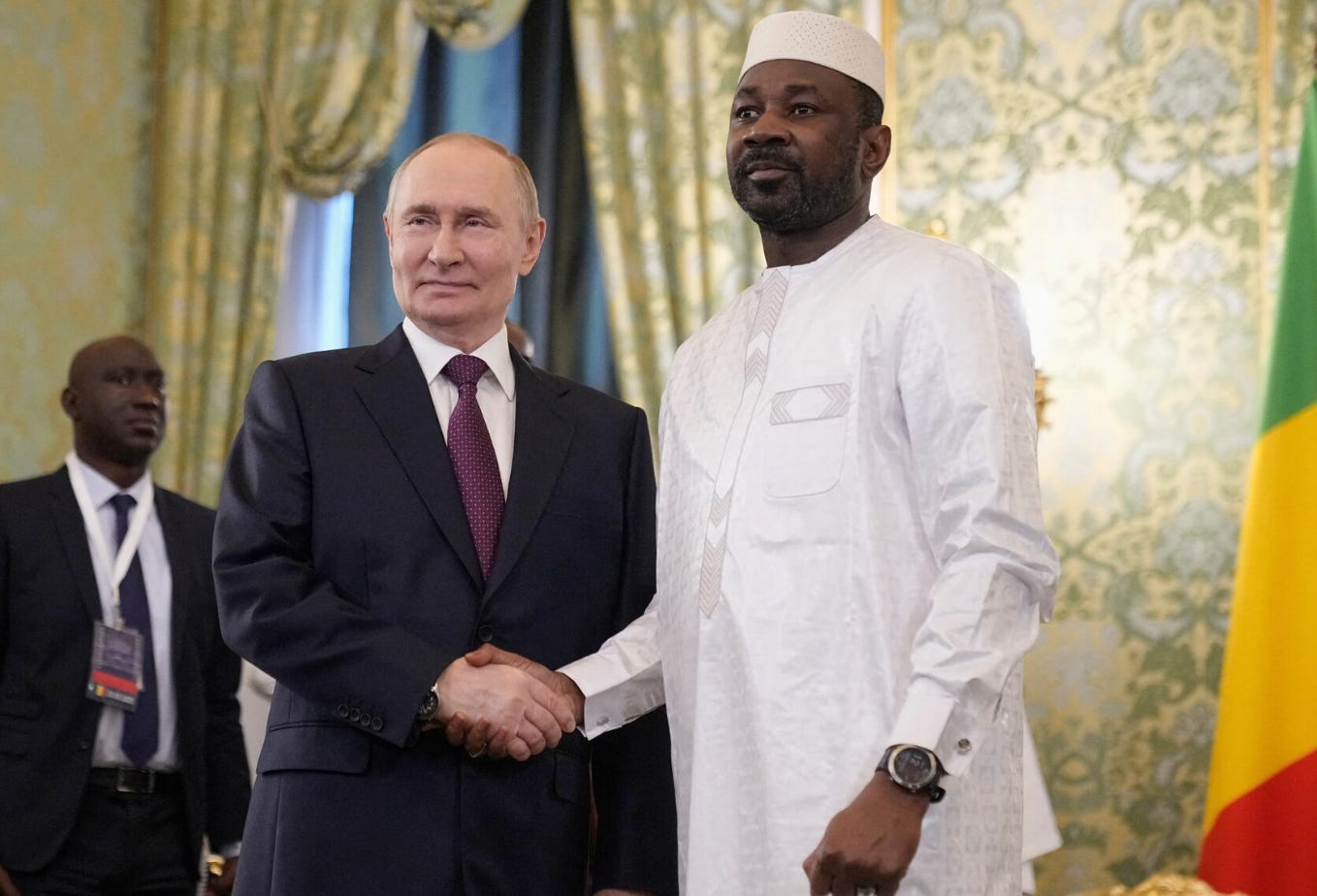
On Saturday, April 25, explosions and sustained gunfire erupted near the Kati military base outside Bamako, where General Assimi Goïta, leader of Mali's military junta, has installed his residence. Simultaneous strikes followed near the Modibo Keïta International Airport, in Kidal and Gao to the north, and in the central Mopti region.
The assault belongs to a longer trajectory.
Since September 2025, the al-Qaeda affiliate Jama'at Nusrat al-Islam wal-Muslimin, JNIM, has imposed an economic blockade upon Bamako and the principal supply routes of the country, a slow strangulation that has produced fuel shortages, intermittent electricity, and the closure of schools.
Understanding Who is Who:
AQIM (Al-Qaeda in the Islamic Maghreb): The North African affiliate, formed in 2007 from the Algerian Salafist Group for Preaching and Combat, and the parent organization from which the Sahelian jihadist constellation, including JNIM, was generated.
JNIM: Al-Qaeda’s affiliate in the Sahel, formed in 2017 through the merger of several Malian and regional jihadist factions such as Macina Liberation Front, Ansar Dine, and al-Mourabitoun.
The group funds itself by ransoming captives, taxing locals, smuggling weapons, and extorting human and drug traffickers.
The Tuaregs: A Berber people of the central Sahara whose ancestral territories straddle Mali, Niger, Algeria, Libya, and Burkina Faso, and whose history with Bamako has been marked by recurring rebellions over the autonomy of the north, most notable one was in the 1960s. Estimates place their total population at 2–3 million.
Azawad: The name Tuareg separatists use for the northern half of Mali. It was declared an independent state in April 2012 by the National Movement for the Liberation of Azawad (MNLA) and is being actively claimed by the Azawad Liberation Front (FLA).
The instinctive response to this debacle is to reach for the counterterrorism file but that way of framing the problem conceals the deeper geopolitical implications: a major strategic setback for Russia in the Sahel and a direct threat to NATO’s southern flank.
The Origins of the Crisis
The Sahelian crisis traces its proximate origins to the collapse of the Qaddafi regime.
The 2011 NATO-backed fall of Tripoli unleashed consequences that Bamako and the West failed to anticipate, prevent, or counter — chief among them the return of Tuareg fighters previously integrated into Qaddafi’s security apparatus. These men arrived in northern Mali heavily armed and carrying deep-seated resentments over marginalization that had already fueled multiple earlier rebellions against the central Malian state.
By early 2012, Tuareg separatists of the MNLA had already formed tactical alliances with jihadist groups already active in the Sahara. They also declared the independent state of Azawad and rapidly overran the northern half of Mali. Which led to the disintegration of the Malian army and a military coup in Bamako in March 2012 that only deepened the chaos. By January 2013, the jihadist coalition — now dominant over the Tuareg separatists — was advancing southward toward the capital.
It was at this critical juncture that France intervened. Operation Serval (January 2013) shattered the jihadist offensive, retook the northern cities, and prevented the total collapse of the Malian state/government.
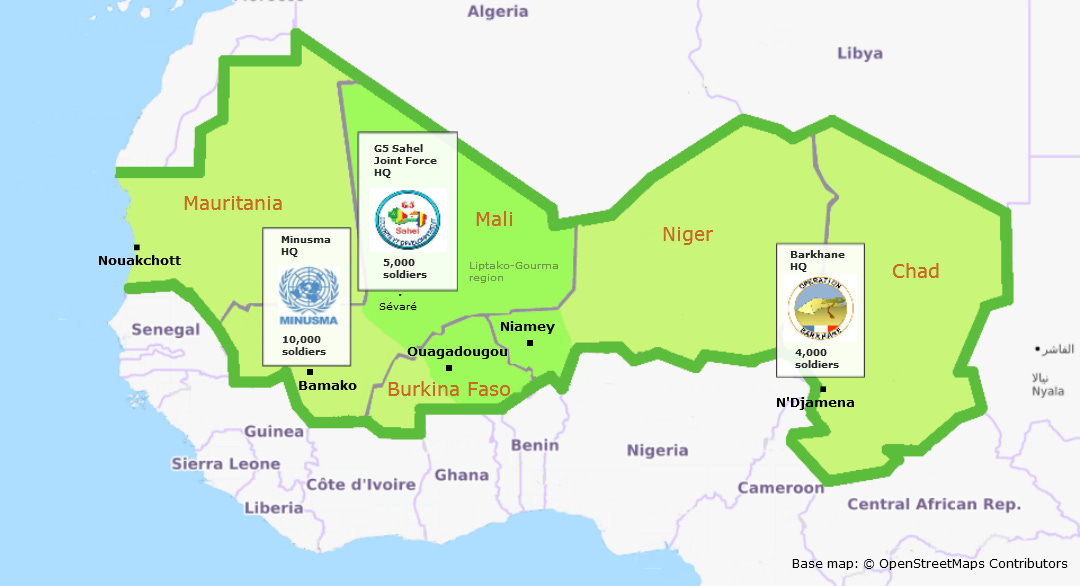
Due to the immense structural issues, Operation Serval was later replaced by the broader regional mission Operation Barkhane, which for nearly a decade maintained a fragile equilibrium across the Sahel. That stability rested on three institutional pillars: the sustained presence of French forces, empowering local partner governments, and a regional security architecture built around the G5 Sahel joint force (Burkina Faso, Chad, Mali, Mauritania, and Niger) and the UN mission (MINUSMA).
The Russian Intervention
However, that French architecture was already under significant strain when Russia moved to dismantle it. Françafrique had been gradually eroding for years, facing growing domestic and regional criticism. Even when French operations delivered tangible security gains, they encountered increasing political contestation and accusations of overreach.
After the death of Yevgeny Prigozhin in August 2023, Wagner later rebranded as Africa Corps, accelerated the expulsion of French forces from Burkina Faso, Mali, and Niger, delivering the final blows to France’s longstanding influence across its former colonies.
At the same time, they fueled tensions between the Sahelian juntas and Washington, which ultimately led to the U.S. withdrawal from Air Base 201 in Niger, a key strategic drone facility that had cost American taxpayers 110 million dollars.
The interesting part regarding Russia’s campaign is that it operated on two parallel tracks: the operational and the informational.
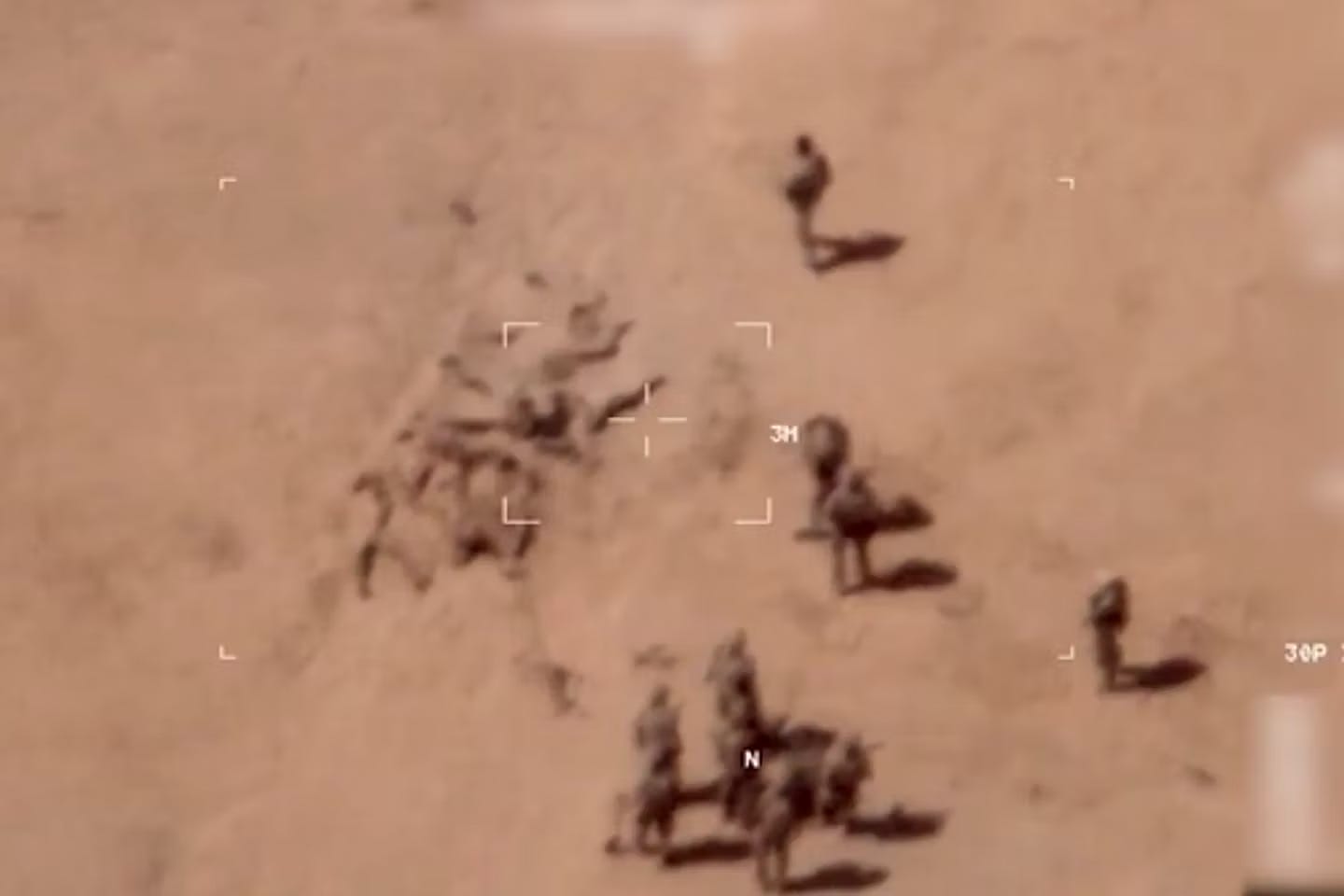
On the informational front, Wagner conducted sustained disinformation operations to delegitimize France as a credible counterterrorism partner. A notorious example took place in April 2022 at the Gossi base. After French forces departed, surveillance drones captured Russian mercenaries digging and staging a mass grave, then attributing the atrocity to the departing French troops. Such episodes exemplified their broader methodology across the region.
France was then forced to retreat. President Emmanuel Macron withdrew 400 special forces from Burkina Faso, 2,400 troops from Mali, and suspended military cooperation with the Central African Republic.
In February 2023, he announced a new security partnership focused on training and support rather than direct security guarantees, diplomatic language that masked a clear drawdown.
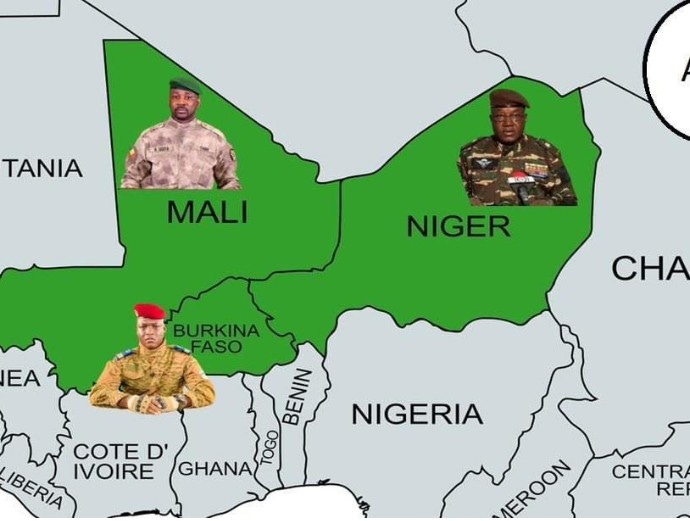
Moscow seized then the opportunity and consolidated further its operational gains with the active involvement of Foreign Minister Sergey Lavrov, who backed the creation of the Alliance of Sahel States (AES) which united Mali, Burkina Faso, and Niger as a direct counterweight to ECOWAS and the African Union, institutions long central to Western and NATO-linked regional cooperation against terrorism and other threats.
Mali: Russia's New Afghanistan
However, despite its early successes in the Sahel with a limited number of operators, Russia made costly strategic errors in Mali. The most visible case occurred on 25 July 2024 at Tinzaouaten, near the Algerian border, where Tuareg forces ambushed a joint column of Wagner mercenaries and Malian troops, delivering what remains Wagner’s most significant defeat in Africa to date.
The toll was heavy as roughly 20 Russian mercenaries were killed and around 10 Malian Armed Forces (FAMA) soldiers dead, several armored vehicles destroyed, and at least one helicopter lost.
More importantly, when viewed alongside the rapid expansion of jihadist groups and their growing cooperation with Tuareg factions, the Tinzaouaten defeat revealed early on that Russia is repeating in West Africa the classic doctrinal mistakes of the Soviet campaign in Afghanistan. One can argue that it made similar ones in Syria as well, but given the overwhelming historical evidence and archives, I chose to focus on Afghanistan as a template.
Four errors stand out.
The first error is the primacy of total regime preservation over meaningful territorial command, sustained by systematic disinformation campaigns. Much as Soviet strategy in Afghanistan centered on shoring up Kabul's communist leadership while effectively ceding the countryside, Africa Corps today channels its resources into protecting the Malian junta and securing gold extraction corridors — leaving vast interior territories open to JNIM expansion.
Indeed, Russian messaging operations paper over this de facto withdrawal by manufacturing the perception of Malian junta competence and military momentum. In the near term, this posture can appear functional, but it intensifies the vulnerabilities bearing down on the central government. Any perceptible sign of fragility risks triggering an escalatory cycle of jihadist attacks, hastening precisely the systemic breakdown the strategy was designed to forestall.
“The Soviet Army also quickly realized the inadequacy of its preparation and planning for the mission in Afghanistan. The initial mission—to guard cities and installations—was soon expanded to combat, and kept growing over time. The Soviet reservists, who comprised the majority of the troops initially sent in, were pulled into full-scale combat operations against the rebels, while the regular Afghan army was often unreliable because of the desertions and lack of discipline.”
Svetlana Savranskaya, Afghanistan: Lessons from the Last War, 2001
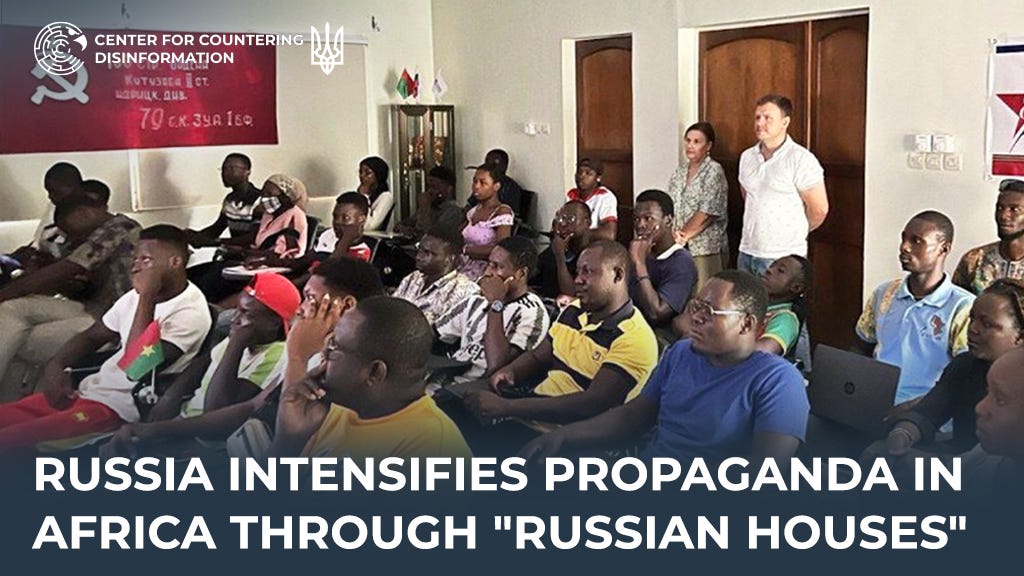
The second pattern is an institutional refusal to grapple with the genuine ethnic and political grievances that give the insurgency its sociological fuel. Moscow and the Bamako junta have met Tuareg claims with coercion rather than negotiation. The Tuareg are a historically subaltern, predominantly Berber-speaking pastoral-nomadic people whose territoriality and social organization are anchored in the northern Saharan and Sahelian ecozones, and who have long articulated demands for autonomy from a sedentary, south-dominated central state whose administrative logic sits in fundamental tension with their segmentary social structures.
The Soviet parallel is instructive: Moscow systematically bypassed the autochthonous institutional frameworks sustaining Afghan social order, among them the jirga, the deliberative council rooted in tribal and lineage structures, and the qawm, the primordial solidarity group defined by overlapping ties of kinship, locality, and patron-client reciprocity that constituted the foundational unit of political allegiance.
The junta and its Russian patrons have reproduced this failure at large scale in Mali, misrecognizing Tuareg ethno-political identity as a security variable to be neutralized rather than a deeply embedded sociocultural formation requiring genuine interlocution. The consequence has been the progressive and gradual reintegration of Tuareg factions into tactical convergence with JNIM, enlarging the insurgency's ethnic constituency and territorial reach.
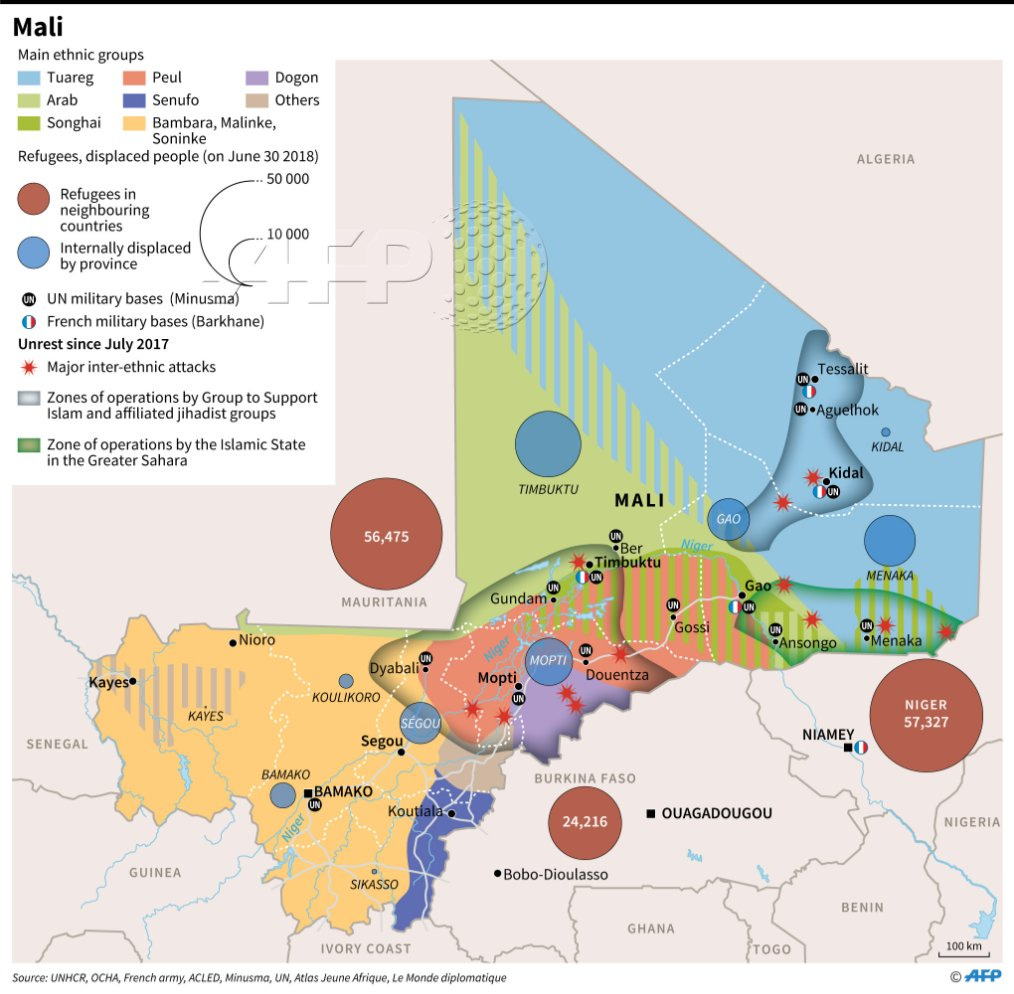
The third pattern is the excision of Mali from any broader architecture of legitimacy or multilateral cooperation. Following the coups in Burkina Faso in 2022 and Niger in 2023, the Sahelian juntas made a calculated break with ECOWAS, the regional body that had formally condemned the seizures of power and signaled the possibility of sanctions and military intervention. The Soviet precedent is structurally illuminating. Moscow progressively confined itself to a narrow, deeply illegitimate client government in Kabul, hemorrhaging both domestic Afghan support and international standing in the process.
The Sahelian juntas have traced a comparable trajectory, opting for open confrontation with regional institutions and Western interlocutors rather than seeking multilateral accommodation. The consequences have been predictable. Diplomatic encirclement, economic sanctions from regional bodies, and near-total security dependence on Moscow as the sole patron willing to underwrite their survival have followed in sequence.
What makes this pattern particularly damaging for Mali, however, is that isolation is not symmetrical in its costs.
For Moscow, the severing of Mali’s Western and regional partnerships is strategically rational, as it deepens junta dependency, forecloses alternative patrons, and consolidates Russian leverage.
For Bamako, the calculus is far more punishing. The rupture with Western partners and regional bodies has effectively dismantled the intelligence-sharing architecture that previously provided actionable information on jihadist networks, financing flows, and cross-border movements. JNIM operates across porous Sahelian frontiers, and countering it requires precisely the type of multilateral intelligence cooperation that isolation has rendered unavailable.
Fourth, the chronic underestimation of the adaptive capacity and structural resilience of local insurgent networks. Soviet planners entered Afghanistan with the assumption that a conventionally superior military apparatus could rapidly dismantle a fragmented tribal resistance. The mujahideen confounded that assumption entirely, demonstrating a remarkable capacity for tactical improvisation, terrain exploitation, and the construction of durable decentralized organizational forms that proved highly resistant to attrition.
Russia and the Malian junta have reproduced the same foundational miscalculation. They have operated under the recurring assumption that concentrated firepower, mercenary deployment, and periodically visible operational successes such as the seizure of Kidal would progressively degrade JNIM and Tuareg resistance to the point of collapse.
The insurgents have instead demonstrated a sophisticated repertoire of adaptive strategies by integrating guerrilla tactics with economic strangulation and colonizing governance vacuums left by state absence.
“Interestingly, both the Mujahadeen and the Chechens, confronted with a strategic paradox of unlimited aims and limited means, were compelled to adopt a Fabian strategy against the Russian military. “The strategy of Fabius was not merely an evasion of battle to gain time, but calculated for its effect on the morale of the enemy.” According to Liddell Hart, the Roman general Fabius knew his enemy’s military superiority too well to risk a decision in direct battle; therefore, Fabius sought to avoid it and instead sought by “military pin-pricks to wear down the invaders’ endurance.” Thus, Fabius’ strategy was designed to protract the war with hit-and-run tactics, avoiding direct battles against the enemy’s superior concentrations.”
Robert M. Cassidy, Russia in Afghanistan and Chechnya: Military Strategic Culture and the Paradoxes of Asymmetric Conflict, 2003
Implications for Europe and NATO South
The unfolding crisis in Mali carries profound strategic consequences for Europe.
The first and most immediate risk is a renewed surge in migration.
Mali lies at the center of the main overland migration corridors from sub-Saharan Africa toward Libya and the Mediterranean. The loss of state control in Bamako and across its northern and central regions is already accelerating irregular migrant flows. These movements are larger in scale than previous waves and arrive in a Europe still politically scarred by the Libyan and Syrian crises.
The second risk is the weakening of NATO’s southern flank and the growing difficulty of effective intervention.
Jihadist groups, particularly JNIM, are actively seeking to replicate in Niger and Burkina Faso the same strategy of territorial expansion, economic blockades, and coordinated attacks that has succeeded in Mali. A contiguous zone of instability stretching across the three Alliance of Sahel States members would grant jihadists strategic depth, operational sanctuaries, and easier access toward coastal West Africa and the Maghreb. This dramatically raises the cost and complexity of any future European military engagement while leaving Europe’s southern frontier increasingly exposed and harder to defend.
In essence, the disintegration of authority in Mali should be seen as the leading edge of a wider process that threatens to destabilize the entire central Sahel and export its consequences directly into Europe.
The tension and interplay between nomadic and sedentary civilization—what a beautifully framed analysis. You truly are a compatriot of Ibn Khaldun.
Excellent analysis !