Long Cycles is published on the 15th of every month and explores the structural changes transforming societies beyond the Western world. Demographic trends, migration, political realignments, AI adoption, urbanization, and generational change are examined not as isolated events but as part of longer historical trajectories.
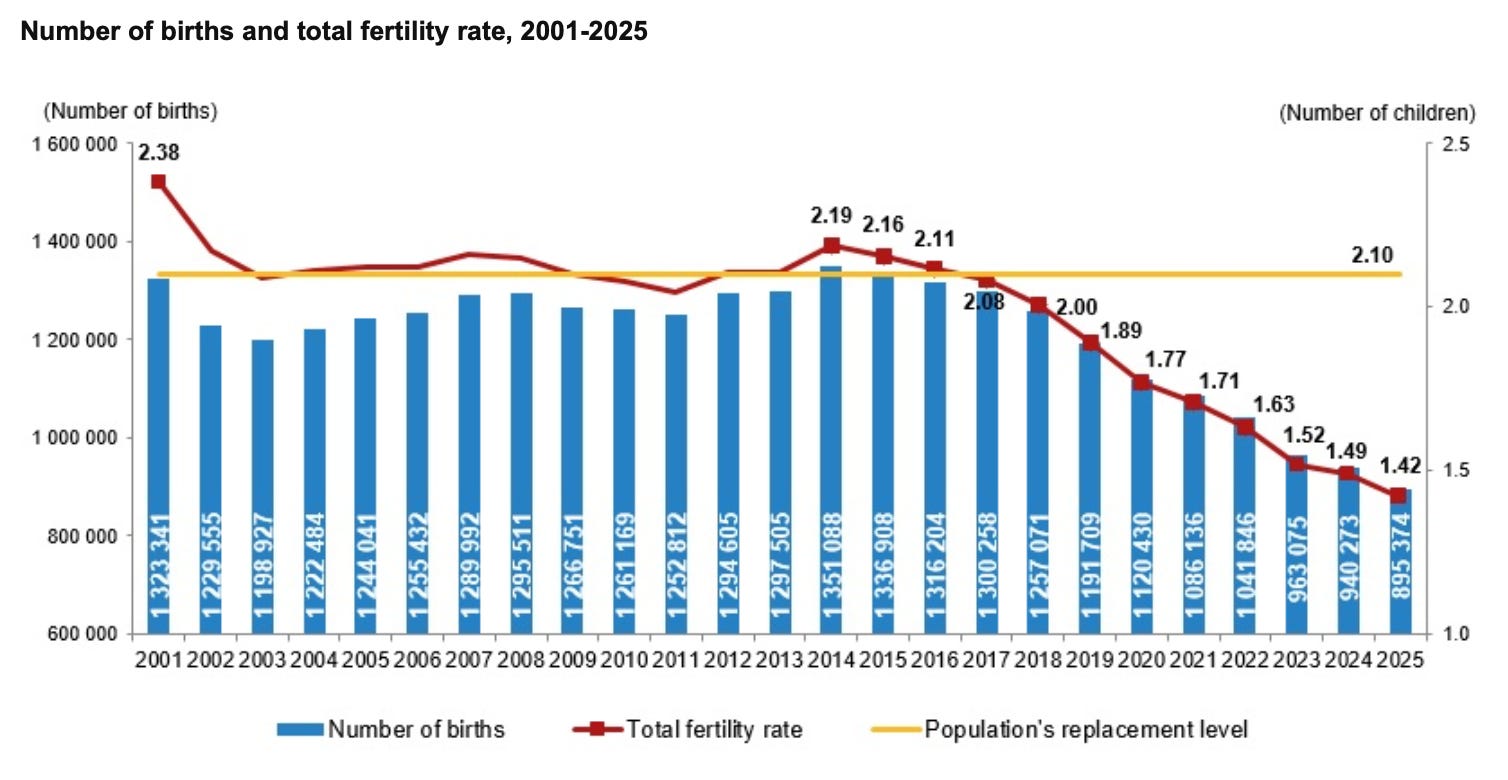
For much of the 20th century, Turkey's strength rested on a young and rapidly growing population. That demographic advantage is now fading. According to new data from Turkey's statistical agency, the country's fertility rate fell to 1.42 children per woman in 2025, far below the replacement rate of 2.1 and the 9th consecutive year below that threshold. In 2001, the figure stood at 2.38.
Population mobility remains high as well. During 2025, 403,216 people emigrated from Turkey, a 5 percent decline from the previous year. Of those leaving, 248,097 were foreign nationals and 155,119 were Turkish citizens. Although emigration eased slightly, departures continued to exceed arrivals, highlighting that Turkey faces not only a fertility crisis but also sustained population outflows.
President Recep Tayyip Erdoğan's government increasingly treats today's demographic trends as a national security issue. Ankara has designated 2026–2035 the "Decade of Family and Population" and introduced policies intended to encourage marriage and larger families. Whether those measures can reverse a trend already visible across much of Europe and East Asia remains uncertain. Once fertility falls well below replacement level, few countries have managed to restore it for long.
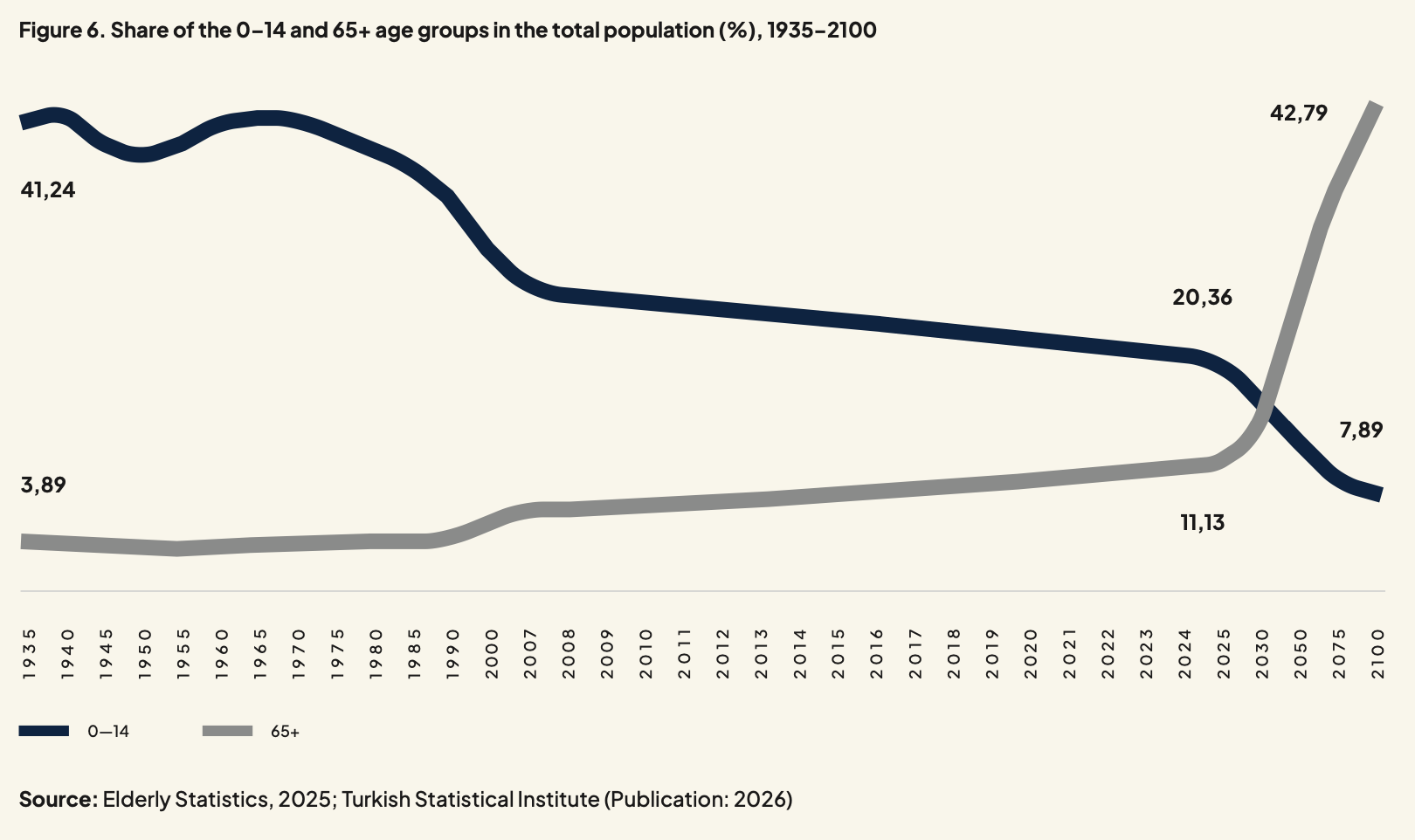
“In Türkiye, while the child and youth population is decreasing, the share of those aged 65 and over is increasing. As of 2025, the elderly population share has risen to 11.1%.
According to all population projection scenarios, the 0–14 age group and the 65-and-over age group are projected to converge between 2030 and 2040. By 2100, the share of the elderly population is projected to reach 33.6% under the main scenario and 42.8% under the low scenario. Even the most optimistic (high) scenario foresees that by 2100 about one in three people (28.2%) will be elderly.”
Source: Turkish Ministry of Family and Social Services
For decades, one of Kyrgyzstan's greatest economic challenges has been the steady outflow of workers. Hundreds of thousands of Kyrgyz citizens have left to seek employment abroad, particularly in Russia, sending home remittances that account for a substantial share of the country's economy. While those transfers support many families, they also leave Kyrgyzstan dependent on foreign labor markets and vulnerable to demographic decline.
To address that challenge, the Kyrgyz government has continued encouraging members of the ethnic Kyrgyz diaspora to return. According to the Ministry of Labor, Social Security and Migration, 387 ethnic Kyrgyz received returnee (kairylman) status during the first seven months of 2026.
The kairylman (кайрылман) program, whose name literally means “returnee,” is designed for ethnic Kyrgyz whose families settled outside the country’s borders, often during the Soviet period or earlier. The status allows them to relocate to Kyrgyzstan while receiving healthcare, education, pensions, social benefits, and employment rights comparable to those of citizens for up to three years as they complete the process of obtaining full citizenship.
The policy has been part of Kyrgyzstan’s nation-building strategy since independence in 1991. More than 90,000 ethnic Kyrgyz have resettled in the country over that period, and roughly 70,000 have gone on to receive Kyrgyz citizenship. Beyond increasing the population, the government hopes returning families will strengthen the labor force, help offset outward migration, and reinforce cultural and linguistic ties with Kyrgyz communities that remained outside the country’s borders after the breakup of the Soviet Union.
“Over the seven-month period, ethnic Kyrgyz who arrived from the following countries were granted kairylman status:
Uzbekistan — 16 people;
Tajikistan — 351 people;
China — 10 people;
Russia — 5 people;
Afghanistan — 1 person;
Other countries — 4 people.
Under Kyrgyz law, kairylmans are provided with social guarantees and benefits largely equivalent to those available to citizens of the republic. Status holders are entitled to social benefits, pensions, healthcare, education and employment in Kyrgyzstan.”
For decades, Saudi Arabia’s economy was defined by oil. Today, the kingdom is investing billions to ensure that artificial intelligence becomes another pillar of its future economy. Data centers, advanced computing infrastructure, and AI research have become central to Crown Prince Mohammed bin Salman’s Vision 2030 strategy to diversify the country beyond hydrocarbons.
The scale of that effort is becoming increasingly visible. In its 2026 World Development Report, The Promise of Artificial Intelligence, the World Bank ranked Saudi Arabia among the world’s top 10 countries for private investment in artificial intelligence. The report reflects several years of rapid expansion. Saudi Arabia’s data-center capacity grew from 68 megawatts in 2021 to 467 megawatts by the first quarter of 2026, nearly a sevenfold increase in just five years. Investments in the sector have exceeded 16 billion Saudi riyals (approximately $4.3 billion) since 2016.
The country’s technology workforce has expanded just as quickly. Nearly 426,000 people now work in the sector, an increase of 186 percent since 2018, while women account for 35 percent of information and communications technology jobs. Saudi Arabia also ranked first in the world for government AI strategy and first in the Arab world, 14th globally, in a United Nations-linked Global AI Index. Earlier this year, the government designated 2026 the “Year of AI,” underscoring the central role artificial intelligence now plays in national economic planning.
The latest step came on 13 August, when Saudi Arabia’s Public Investment Fund (PIF), the kingdom’s sovereign wealth fund, and Google Cloud announced plans to establish an advanced AI center near the city of Dammam on the Persian Gulf coast. The project will deploy Google’s most advanced computing hardware, including Tensor Processing Units (TPUs), Graphics Processing Units (GPUs), and the company’s Vertex AI platform for developing generative AI applications. Subject to regulatory approval, Saudi officials estimate the partnership could contribute more than 265 billion Saudi riyals (roughly $70 billion) to the country’s economy over the next eight years.
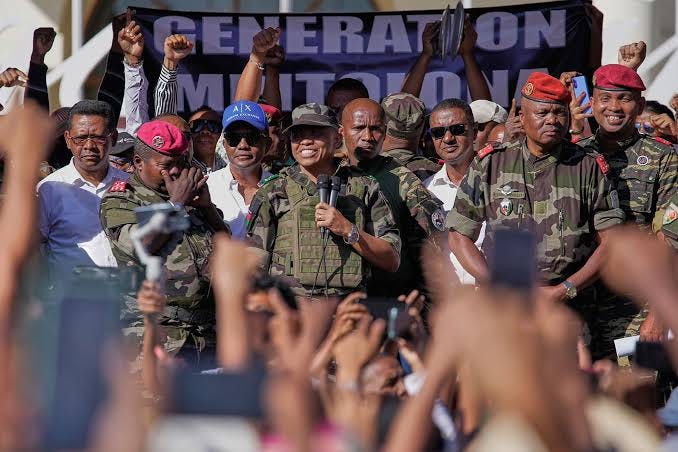
Nine months after mass protests led largely by Generation Z forced President Andry Rajoelina from power, Madagascar remains in a fragile political transition. A military-backed interim government led by Colonel Michael Randrianirina is attempting to restore stability while preparing the country for elections currently scheduled for 2027.
The unrest reflected more than dissatisfaction with a single government. Madagascar is one of the world's poorest countries, with roughly three-quarters of the population living in poverty despite possessing some of the world's most valuable deposits of critical minerals, including graphite, nickel, cobalt, and rare earths that are increasingly important for batteries, electric vehicles, and advanced technologies. A rapidly growing and youthful population, limited economic opportunities, and accelerating urbanization have intensified demands for political and economic change.
The transitional government is pursuing two parallel objectives. Politically, it has begun long-delayed national consultations on constitutional reform after repeated postponements. Economically, the government is reopening Madagascar's mining sector after a 16-year pause (except gold), hoping that renewed investment in critical minerals will generate jobs, attract foreign capital, and strengthen public finances.
Securing foreign partners has become central to that effort. In February 2026, Randrianirina made his first official trip outside Africa to Moscow, where he met President Vladimir Putin to discuss expanded cooperation in mining, energy, agriculture, defense, education, and healthcare. Foreign Minister Sergey Lavrov later reaffirmed those discussions with his Malagasy counterpart, Alice N'Diaye, ahead of Madagascar's participation in the next Russia–Africa Summit.
Questions of sovereignty have also moved to the forefront.
On 1 July 2026, Madagascar's National Assembly adopted Law No. 2026-007, providing for the automatic transfer to the state of land titles that remained registered in the names of foreigners on 26 June 1960, the eve of independence, and had never subsequently been transferred to Malagasy ownership.
On 3 August, the High Constitutional Court upheld the legislation as constitutional, clearing the way for its implementation. Authorities have presented the measure as completing the unfinished process of decolonization by restoring national control over land and natural resources.
The law excludes diplomatic and consular properties, land that had already been transferred to Malagasy citizens before the cut-off, and properties owned by foreigners who later acquired Malagasy nationality and properly registered their ownership. Madagascar's approach reflects a broader debate across Africa over the legal legacy of colonial land ownership, although unlike the redistribution programs pursued in countries such as Zimbabwe, South Africa, and Namibia, it focuses specifically on unresolved colonial-era land titles rather than contemporary foreign-owned property.
“That upheaval interrupted Madagascar's engagement with the IMF. An IMF staff mission led by Constant Lonkeng visited Antananarivo from March 26 to April 8, 2026 to hold discussions on the combined third and fourth reviews of the country's Extended Credit Facility (ECF) and Resilience and Sustainability Facility (RSF) arrangements — programs originally approved by the IMF's Executive Board in June 2024. Pending staff-level agreement and formal Board approval, Madagascar stands to receive a combined disbursement of roughly SDR 134.4 million, or about $183 million, under the two facilities. The resumption of talks after the political interruption is itself a signal that the transitional authorities are seeking continuity with the prior government's reform commitments rather than a wholesale reset of economic policy.”
“According to the African Development Bank's African Economic Outlook 2026, Madagascar's real GDP growth slowed to 3.2% in 2025, down from 4.3% in 2024, even as agriculture (5% growth), metallurgy (9.6%) and banking and insurance (14.5%) continued to expand.”
5. Brazil Becomes China's Space Anchor in Latin America
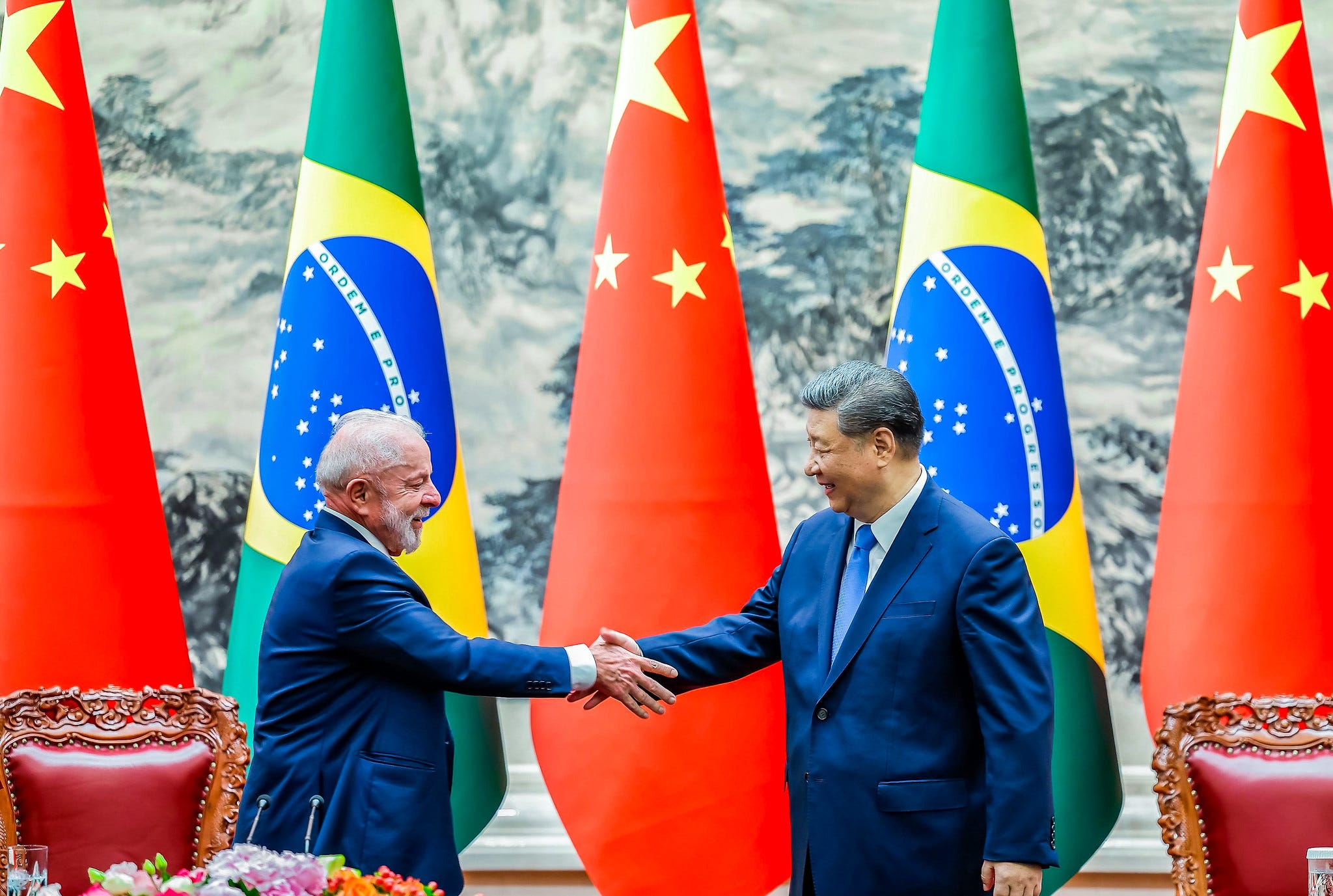
China and Brazil are taking another step in a space partnership that has lasted for more than three decades. The two countries have announced plans to jointly develop CBERS-5, a new geostationary satellite designed to provide continuous monitoring of weather, climate, and environmental conditions across South America. Scheduled for launch in 2030, the satellite will improve the region’s ability to track storms, droughts, floods, and other extreme weather events in real time, strengthening disaster preparedness and early-warning systems.
The project builds on the China–Brazil Earth Resources Satellite (CBERS) program, which started in 1988 and has produced several Earth observation satellites since the first launch in 1999. Brazil was the first Latin American country to partner with China in the satellite sector and has the region’s largest aerospace industry, making it Beijing’s most important space partner in Latin America. Unlike earlier CBERS satellites, which orbit the Earth and pass over the same location periodically, CBERS-5 will operate in geostationary orbit, remaining fixed above the continent and providing continuous, 24-hour coverage. That capability will allow meteorological agencies to monitor rapidly changing weather systems with much greater precision.
The partnership, however, has expanded well beyond satellites. This year, China and Brazil began also constructing a joint laboratory for space technologies while continuing work on a major telescope project in South America, further deepening scientific cooperation. The expansion comes as China’s broader space ambitions in Latin America face growing geopolitical headwinds. The United States successfully pressed Argentina and Chile to freeze two high-profile Chinese-backed astronomical observatories in the Andes, citing concerns that their locations and technical capabilities could support satellite tracking, surveillance, or other dual-use military applications. Governments in both countries aligned with Washington’s security concerns amid broader strategic competition with China and wider trade and diplomatic tensions. Against that backdrop, Brazil has become an even more significant partner for Beijing’s long-term scientific and space ambitions in the region.




I appreciate getting news about events or trends that do not generally appear in most western media outlets.
Good work as usual by Zineb.