

“The mind of man is capable of anything--because everything is in it, all the past as well as the future.”
Joseph Conrad
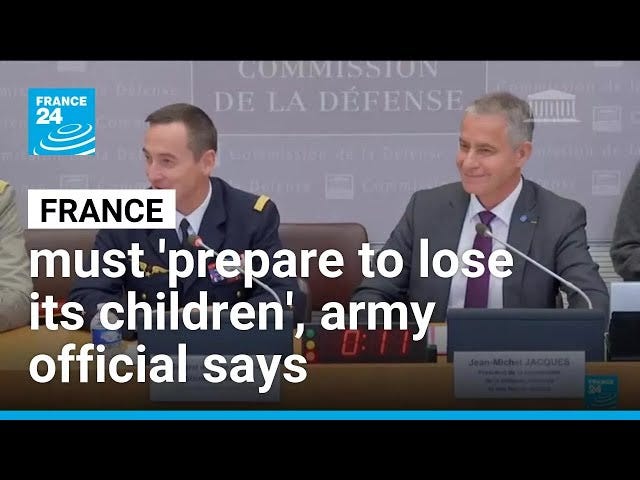
Something happened in France that I have not stopped thinking about. General Fabien Mandon stood before a congress of mayors and said the country must be ready, psychologically, for the possibility of losing its children if conflict with Russia ever came. It was a jarring moment, not because the warning was new, but because it made visible a certain unease that runs quietly across Europe.
France’s greatest weakness, he insisted, was not material capability but societal will.
“We have the know-how, and we have the economic and demographic strength to dissuade the regime in Moscow,” he said. “What we are lacking—and this is where you [the mayors] have a role to play—is the spirit. The spirit that accepts that we will have to suffer if we are to protect what we are. If our country wavers because it is not ready to lose its children… or to suffer economically because the priority has to be military production, then we are indeed at risk. You must speak of this in your towns and villages.”
His comments, direct and unsentimental, ignited an immediate political storm.
Left-wing leader Jean-Luc Mélenchon denounced the statement, insisting that it was not the general’s place to “invite mayors or anyone else to start making military preparations that no one has agreed on.” Communist leader Fabien Roussel declared that France’s “51,000 memorials to the war dead” should be warning enough, rejecting what he called “intolerably belligerent speeches.” Even the far right split with Sébastien Chenu accusing Mandon of overstepping his “legitimacy,” while Louis Aliot countered that it remains “necessary to be ready to die for one’s country… if the war is just or to ensure the survival of the nation.”
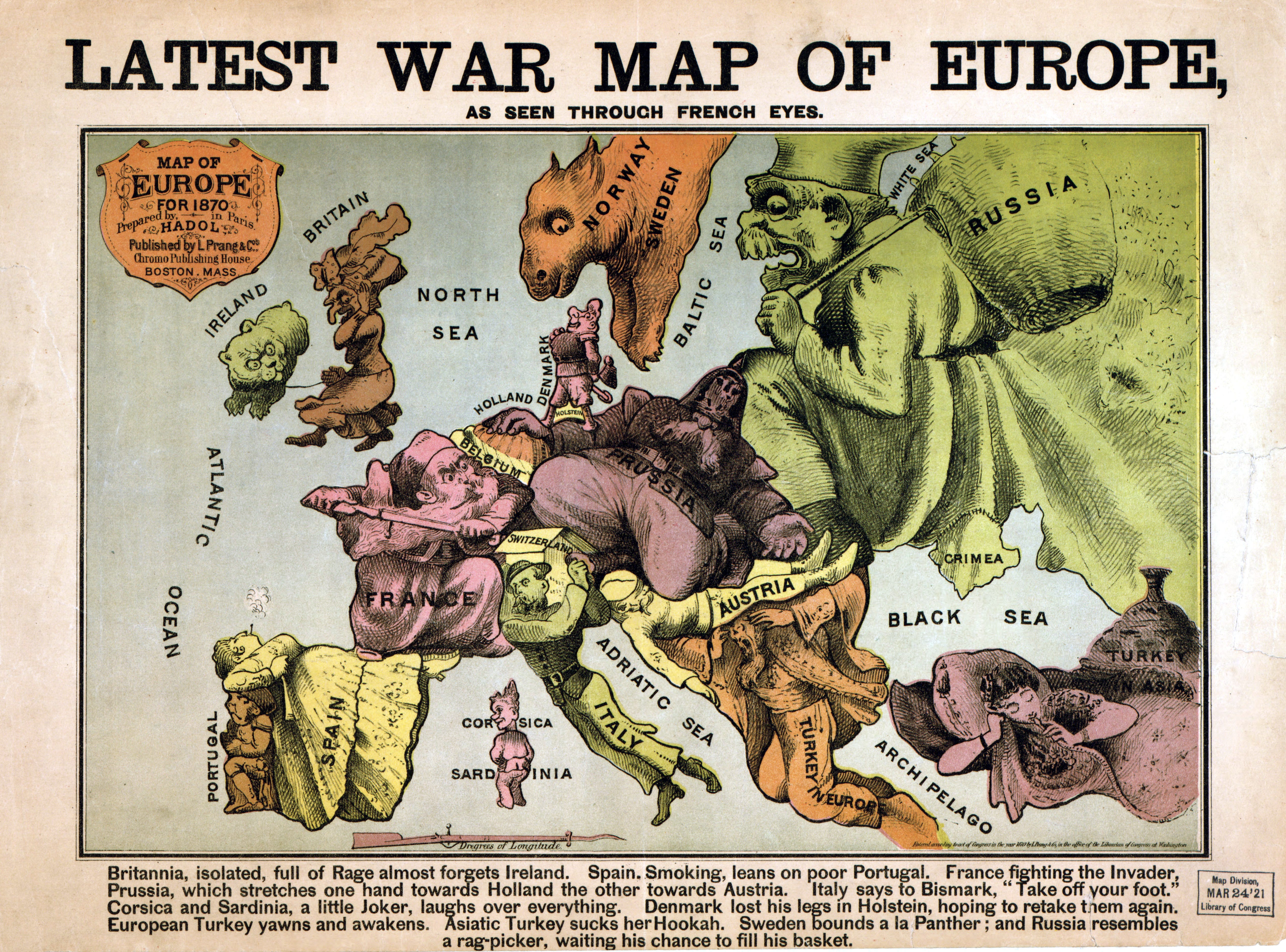
These reactions reflected political traditions that see the nation-state as either outdated or dangerous, and therefore oppose the very measures that effective deterrence requires. But the real alarm lies in the paradox this recoil exposes. Europe talks about defending Ukraine and confronting Russia. It has not made the psychological leap that must precede a society truly preparing for conflict.
In most historical cases, governments preparing for war begin by organizing their societies, shaping expectations, and building resilience before mobilizing resources. Europe is doing something different, something I find strange since it is rebuilding armies and supply chains while leaving the public in a peacetime mindset.
This unreadiness, at least to me, seems to be structural. For thirty years, the continent lived under the assumption that peace was permanent, that security was an ambient condition rather than a responsibility. Welfare systems expanded. Defense budgets shrank. Citizens came to view protection as a function of the social contract rather than of military capacity. Entire generations were raised to believe that war was something Europe had outgrown.
That world is gone.
Remilitarization is now the central task facing the continent, and hesitation carries real costs. Political priorities and social expectations are already shifting. Defense budgets are rising. Industrial policy is moving toward arms production, energy security, semiconductors, and critical minerals. Supply chains are being redesigned for resilience rather than efficiency. The long period during which Europe relied on the United States, global markets, and comforting assumptions has ended.
This transition will expose Europe’s institutions. The European project must now operate in a world defined by power, where procedural language and moral appeals no longer shield states from hard choices.
It will also force governments to confront unresolved economic constraints created by aging populations and high welfare commitments. It will reveal the demographic pressures that make recruitment and military expansion far more difficult than political rhetoric suggests.
And it will bring to the surface deeper vulnerabilities that Europe rarely acknowledges. Europe cannot mobilize without a story about itself. The United States has one. Russia has one. China has one. Europe, by contrast, abandoned national narratives and replaced them with technocratic language and moral universalism. Remilitarization requires identity, purpose, and legitimacy. In Eastern and Central Europe, these have begun to be rebuilt. Elsewhere, they have not.
There is also the matter of culture. Modern European societies value somewhat flat structures, negotiation, and social equality. Militarization depends on hierarchy, command, and discipline. The shift is not impossible, but it runs counter to the everyday ethos of European life. Reintroducing hierarchy at scale feels alien and generates resistance.
What is striking, and largely missing from most coverage, is that the political ideologies that sustained demilitarization and rejected strategic power will not survive this transition intact. They will lose ground not through argument but through circumstance, because the world that allowed them to flourish no longer exists. In this sense, General Mandon was not provoking a debate. He was describing a reality that has already taken shape and asking whether Europe is willing to acknowledge it. Europe cannot really militarize without the spirit of war.
Come to Finland. Over 70% of the population is ready to defend the country, according to surveys. We never stopped military service. We still have bunkers, and a larger artillery than France or Germany. There is a reason for that.
What about those who have come via mass legal or illegal immigration? Do they have the required spirit to defend Europe? Do they want to sacrifice their children?